When does decommissioned cable become toxic and dangerous waste? ITU-T L.24, table by table
7 min read
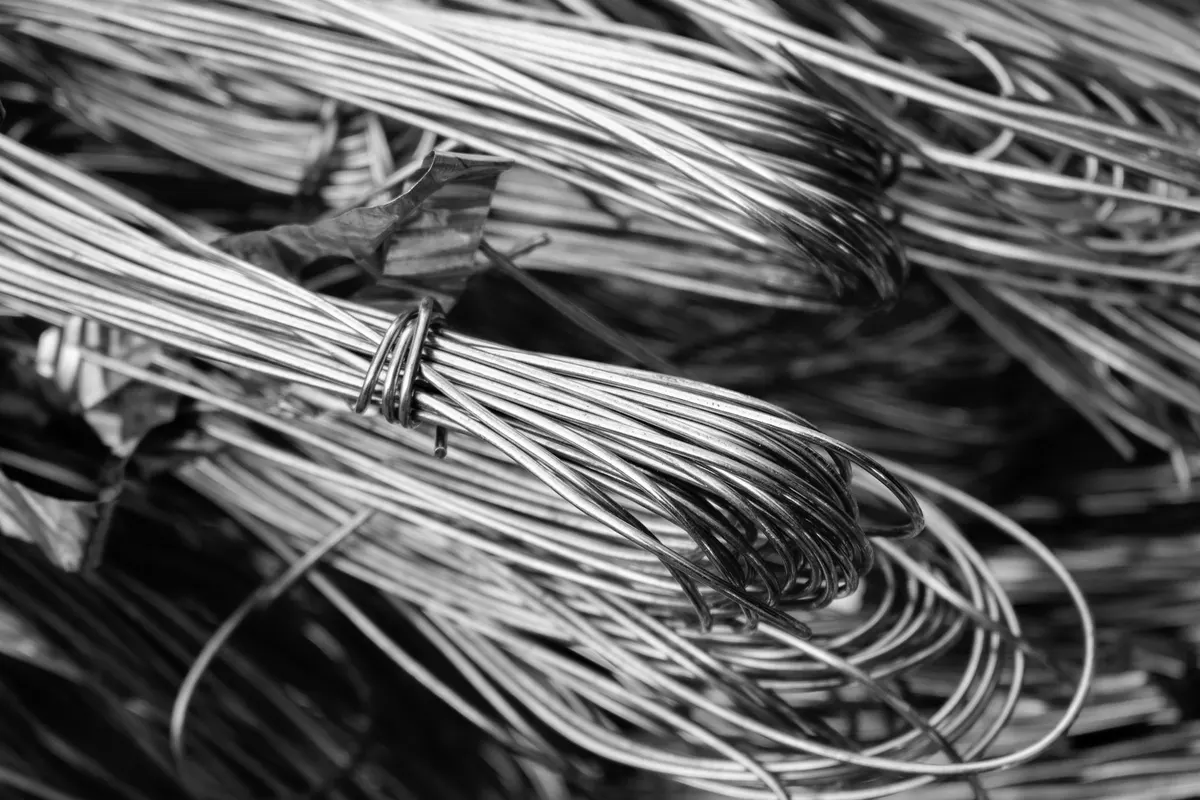
A copper route gets decommissioned: sheath, filler compound, a resin splice all end up in a container outside the site. Whoever signs the transport document has two boxes to choose from — hazardous waste, or not — and neither gets picked by eye. Whoever picks the wrong one usually finds out late: when the destination plant refuses the load, or when an inspection asks for a record that nobody ever wrote.
What ITU-T L.24 is
ITU-T Recommendation L.24 (11/2009), “Classification of outside plant waste”, approved on 29 November 2009 by Study Group 5, is in force. It does not cover active equipment or data halls: it covers cable, splices, batteries, poles — whatever comes out of a trench, a cabinet, a decommissioned route, once that route stops being infrastructure and becomes waste. It defines when that material is ordinary waste, and when it is, in its own words, toxic and dangerous waste (TDW).
Two tables, not a sum
The criterion, in the Scope, is blunt: “A waste product may be classified as toxic and dangerous waste (TDW) if, and only if, it contains any of the constituents listed in Table 1, and if these, in turn, present any of the characteristics shown in Table 2, in the proportions and limits considered in the current international regulations (Restriction of Hazardous Substances Directive or RoHS).”
The two tables intersect, they do not add up. Table 1 lists 36 constituents — lead, cadmium, mercury, hexavalent chromium, cyanides, PCBs, among others — that can only make a waste dangerous if they are present; Table 2 lists 16 characteristics, from H1 (explosive) to H14 (ecotoxic), passing through H6 (toxic), H7 (carcinogenic) and H8 (corrosive), that the constituent must also display. A cable containing lead is not automatically TDW: it becomes TDW only if the lead, in the form and concentration actually present, produces one of those characteristics. The RoHS reference is not fixed in time: the Recommendation, written in 2009, points to whichever international regulations are in force at the moment of testing — today, that is Directive 2011/65/EU, not Directive 2002/95/EC, which was the one in force when L.24 was approved.
What actually comes out of a site
Appendix I — not an integral part of the Recommendation, but real-world, documented experience from Telefónica de España — puts names to the codes. Scrap lead-sheathed cable: C18/H5, a declared exposure limit of 0.05 mg/m³. Station batteries, lead-acid or alkaline nickel-cadmium: C18/C23 or C11/C24. PVC joint adhesive: C41/H4. Sealant for occupied ducts: C37, with C43 in brackets, and H4, characterised on the already-aged product. Creosote for wood preservation: C43, H7 and H14 — and wood scrap, if creosoted, has to be analysed separately. None of this is hypothetical in a network that is still dismantling cross-connect cabinets and copper routes — the copper switch-off is producing plenty of it — and a lead-sheathed cable does not get handled like the scrap of a PVC cable with no history behind it.
The test stays in the lab, the decision does not
The tests in clause 6 — flammability, pH, cyanides, corrosion, oxidants, ecotoxicity — are laboratory tests, not something done on a job site. What L.24 actually asks of the site sits upstream of that: recognise the suspect items — lead, splice resin, a battery, creosoted wood — and treat them as such until a laboratory analysis rules them out, not the other way round. The Appendix demonstrates this itself: the table grading materials by their components gives the duct sealant as C37/H4, while the table reporting the characterisations actually performed places it among the inert ones — suspicion and result do not coincide. Clause 6.15 puts it this way: “Once all the waste products have been classified according to the above tests, a table is prepared grading them by groups in accordance with their subsequent management and handling.” For that subsequent management, the clause simply points to whatever national regulations happen to be in force: the technical classification ends exactly where the legal one begins.
Who signs the classification
In Italy, the legal one has a named party. Article 184 of Legislative Decree 152/2006, at paragraph 5, assigns the task: «La corretta attribuzione dei Codici dei rifiuti e delle caratteristiche di pericolo dei rifiuti è effettuata dal produttore» — the correct assignment of waste codes and hazard characteristics is carried out by the producer — based on guidelines from Italy’s national system for environmental protection and research. The producer is not an abstraction: it is the contractor who disconnects the cable from the cabinet or pulls it out of the duct — the same party Article 190 requires, if the waste is hazardous, to keep a chronological loading-and-unloading register, logging type, quantity and origin within ten working days of production. For cable specifically, the waste list transposed into Annex D already splits the two paths: 17 04 10*, with an asterisk, for cables impregnated with oil, coal tar or other hazardous substances; 17 04 11, without the asterisk, for every other cable. Transport then travels with an identification form under Article 193, itself in transition from a paper document to the national electronic register.
What the site record has to capture, before the container leaves
- Describe the material for what it is, not for the cable it used to be: sheath, filler, splice, batteries or treated wood — not miscellaneous debris.
- Flag every item resembling one of L.24’s suspect categories — lead, resin, creosote, a battery — before any analysis: the classification starts from a written fact.
- Match quantity and type across the site record, the loading-and-unloading register and the transport form: three documents, one figure.
- Write into the specification who signs the classification — the producer, under Article 184, paragraph 5 — instead of leaving it undefined until the first container.
- Use the same site identifier as the as-built record and the splice closures that were replaced: the waste going out and the cable coming in describe the same route.
See the service · Talk to an engineer
What we have not verified
We have not verified whether the guidelines from Italy’s national system for environmental protection and research, cited in Article 184 paragraph 5, address network materials explicitly, nor how far along the transition from paper form to the national electronic register under Article 193 actually is: the implementing decrees were not in the text we consulted. We have not verified whether Directive 2011/65/EU on RoHS has been amended or recast since early 2026. Compliance with L.24 remains voluntary, as with any ITU-T Recommendation: no Italian rule calls it up by name, and none is required to.
Two threads, on this subject
First thread: the material removed, the suspect item and the proposed code become lines in the specification and in the site record, tied to the same site identifier — not a line of miscellaneous materials with no follow-up. At acceptance, the check is that every container has a declared producer, a code and, if hazardous, an updated register.
Second thread: the site record, the loading-and-unloading register, the transport form and the as-built record become, with CSIDIA, the group’s other company, a single map on which an AI checks that every decommissioned cable carries a classification consistent with what the record describes — not a code written from memory. Within the client’s perimeter: on-premise, on standalone machines, or a dedicated cloud with a data centre in Italy, always with shared management.
Are you dismantling a cabinet or decommissioning a route and unsure whether what comes out counts as hazardous waste, or whether your site record is enough to prove it either way? Talk to an engineer: the site visit costs nothing, and the classification gets written when the material leaves the site, not when the inspection arrives.
Sources
- ITU-T L.24 (11/2009) — Classification of outside plant waste
- Normattiva — Legislative Decree 3 April 2006, no. 152, art. 184 (classification)
- Normattiva — Legislative Decree 3 April 2006, no. 152, art. 190 (chronological loading-and-unloading register)
- Normattiva — Legislative Decree 3 April 2006, no. 152, art. 193 (waste transport)
- Normattiva — Legislative Decree 3 April 2006, no. 152 (the list of waste is Annex D to Part Four)
- EUR-Lex — Directive 2011/65/EU (RoHS)