The closure is IP68. But does it actually seal, and after how many re-entries?
6 min read
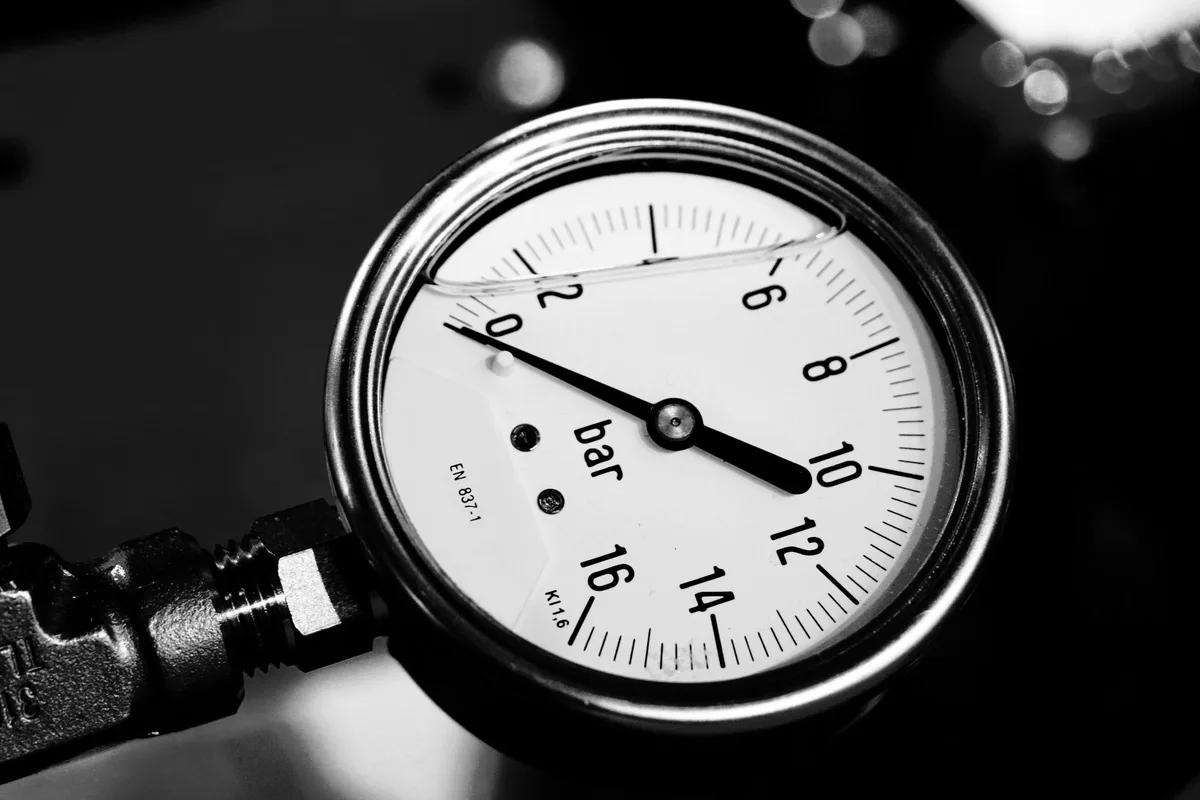
A manhole, a closure sealed two years ago, a branch to add. You lift the cover and find a film of water in the bottom of the first tray. The specification said “IP68”. A typical scenario, not a job of ours, and the question is always the same: if it was IP68, how did the water get in? Because “IP68” was never a promise of sealing over time: it is the outcome of laboratory tests under defined conditions, and in a manhole conditions differ.
What the IP rating classifies, and what it says nothing about.
The reference is IEC 60529:1989+AMD1:1999+AMD2:2013 CSV, edition 2.2 of 29 August 2013, Degrees of protection provided by enclosures (IP Code), from committee TC 70. The abstract leaves no room for doubt: it applies to the classification of degrees of protection provided by enclosures for electrical equipment rated up to 72.5 kV. Two words carry weight: “classification”, because it assigns a code rather than qualifying a product for an environment; and “electrical equipment”, which an optical closure is not.
The code has two numerals — solid objects and access to hazardous parts first, water second — and we are not reproducing the tables: the standard is paywalled and its clauses are not verifiable from an open source. But the point is visible from outside. The rating says nothing about thermal cycling, frost, ultraviolet light, diesel, crush or vibration; it carries neither a depth nor a duration; and nothing at all about re-entries.
The standard that really qualifies a closure exists, and it is free.
It is Recommendation ITU-T L.201 (05/2021), edition 3.0 approved on 29 May 2021 by Study Group 15, Performance requirements for passive optical nodes: Sealed closures for outdoor environments. Born as L.13 in 1992, renumbered in 2016, it downloads free from itu.int.
It defines three environments, and a product qualifies for one — OA above ground, OG at ground level, OS underground: manholes, handholes, direct burial — plus two groups of criteria: mechanical integrity and optical stability.
Sealing is proved under pressure: internal overpressure of 20 kPa for OA and OG, 40 kPa for OS, 98 kPa in pressurised networks. Two requirements, both to be met: pressure loss no greater than 2 kPa, and no bubbles during fifteen minutes of immersion. Then, pressure held, everything else: a water head of 5 metres for seven days (OS) or 1 metre (OG); twelve thermal cycles between −30 and +60 °C underground, −40 and +65 °C elsewhere; impact from a one-kilogram steel ball; 1 000 N crush over 25 cm² (OG and OS); vibration at 10 Hz for one million cycles. The mechanical tests run at −15 °C and +45 °C, and samples must be assembled at −5 °C too: it is in winter that a seal gets fitted wrong. Then hydrochloric acid at pH 2, sodium hydroxide at pH 12, diesel, petroleum jelly, salt mist; and for the materials, fungus and 2 160 hours of ultraviolet, with mechanical degradation below 20%. None of this fits into a four-character rating.
Re-entries are five. Only five.
This is the clause nobody reads. L.201 prescribes five re-entries, with at least one thermal cycle between each, and sealing must be verified after every re-entry, not only at the end. Five is what the qualification proves: a flexibility point in an access network sees far more in twenty years, and beyond that you are outside what was tested.
Two more lines of the same Recommendation are worth a contract clause: encapsulant is not recommended in re-enterable closures, and a closure should reopen and reclose without interrupting live circuits. That second point has a name: dynamic optical stability, the transient loss measured on live fibres while the organizer is handled — 0.5 dB at 1310 and 1550 nm, 1.0 dB at 1625 nm, 0.1 dB residual. Static stability, which almost everyone declares, looks only before and after: anyone who opens a closure on a live cable knows the difference is not academic.
On the IEC side, environmental categories have a number.
The parallel family is IEC 61753-1:2018, edition 2.0 of 15 August 2018 (TC 86/SC 86B), Performance standard – Part 1: General and guidance: it defines the tests and severities forming the performance categories, i.e. operating service environments. For closures there are three: A aerial, G ground — from one metre below ground level to three metres above — and S subterranean. The product standards are IEC 61753-111-07/-08/-09:2021, edition 1.0, which replace parts 111-7, 111-8 and 111-9 of 2009 — note that 111-8 and 111-08 differ — and the aerial and ground parts exclude free-breathing closures; L.201 has harmonised its own tests with IEC 61753-1.
And IP68? In L.201 it appears once, in an informative note: a closure that passes the tightness and submersion tests can be considered to inherently meet the IP68 requirement. A consequence, not a requirement.
The qualification belongs to the product, not to your joint.
ITU-T L.315 (03/2018) is blunt: water gets in anyway, because it depends on the product’s level of protection, immersion period, pressure and the quality with which the closure was assembled in the field. The glass pays: the failure probability of a fibre immersed in water is more than ten times that in dry air, through stress corrosion exactly where the fibre is bent — on the trays, after the splice.
What to write in the specification instead of “IP68”.
- A declared environment, OA/OG/OS or A/G/S, not “outdoor”: different test programmes.
- A qualification report to ITU-T L.201 (05/2021) or IEC 61753-111-07/-08/-09:2021, with tests and severities: IP68 is a consequence, never the sole requirement.
- Dynamic optical stability for every closure acting as a flexibility point.
- A declared number of re-entries, with a re-closure kit in the catalogue: seals and consumables are a purchase line, not a favour.
- A field sealing test once the closure is made, with valve, gauge and a record per joint. To be honest: L.201 does not mandate field testing, it qualifies the product in the laboratory. The threshold must be agreed with the manufacturer and written into the contract, not quoted as a standard requirement.
- Documentary evidence: serial number, environment, date and test result, attached to the joint record and consistent with the as-built.
The point.
A four-character rating fits on one line of a specification and protects nobody. A declared environment, a qualification report and a pressure test once the closure is made move the risk where it belongs. That is why, when we carry out splicing, closure environment and sealing-test result go into the joint record alongside the optical measurements, and in our specification reviews the “IP68” line is the first we rewrite.
Writing a specification, or dealing with closures that keep flooding for no obvious reason? Talk to us: site survey and quotation are free, even just to reread the sealing clauses.
Sources
- Recommendation ITU-T L.201 (05/2021) — Performance requirements for passive optical nodes: Sealed closures for outdoor environments (edition 3.0, approved 2021-05-29)
- IEC 60529:1989+AMD1:1999+AMD2:2013 CSV — Degrees of protection provided by enclosures (IP Code) (edition 2.2, 2013-08-29)
- IEC 61753-1:2018 — Fibre optic interconnecting devices and passive components, Performance standard, Part 1: General and guidance (edition 2.0, 2018-08-15)
- IEC 61753-111-08:2021 — Performance standard, Part 111-08: Sealed closures for category G – Ground (edition 1.0, 2021-04-07)