Empty duct: the test the specification must demand on record
8 min read
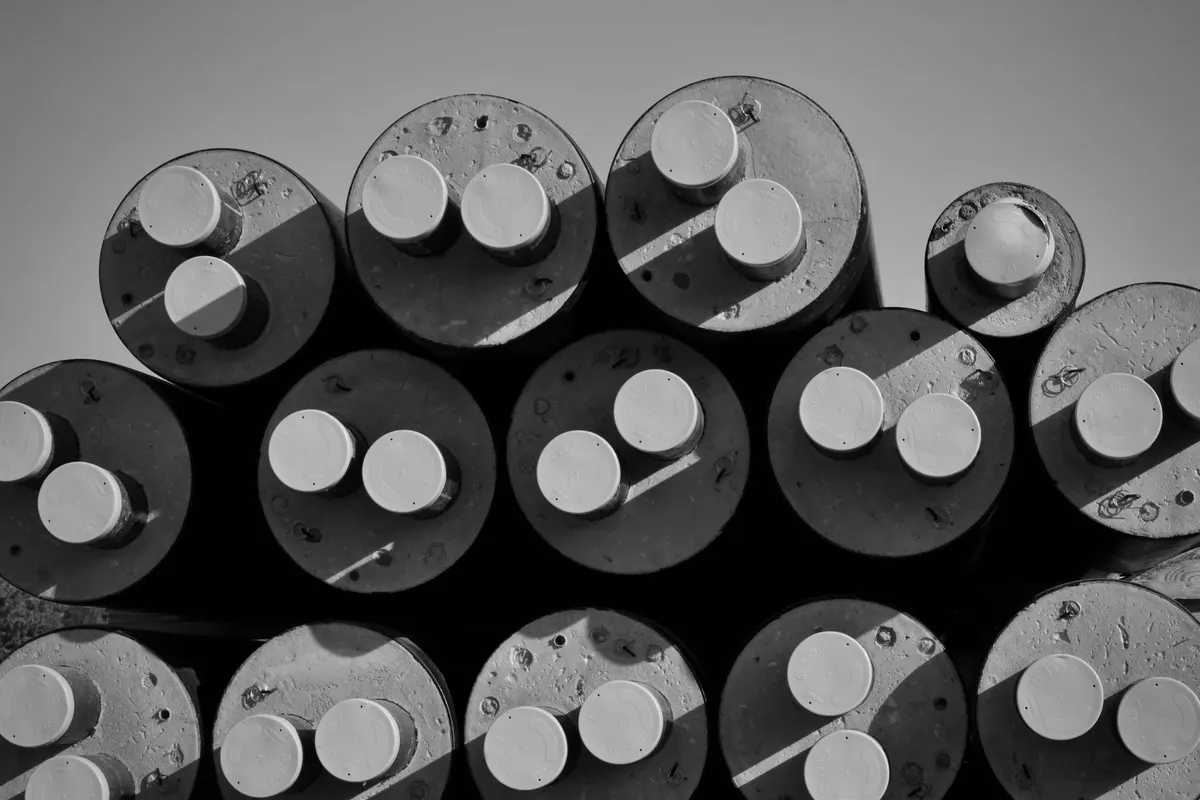
The compressor is ready, the microcable is on its reel, the site supervisor opens the manhole to feed in the blowing head. The duct was laid six months earlier, by another crew. Nobody has ever checked what is actually inside that pipe today. Two hundred metres in, the airflow stalls: a residue of mortar, a crush mark from a heavy vehicle over the backfilled trench, a fitting out of line. Fixing it now costs a borescope, a stalled compressor and a lost day on site. Checking it beforehand, with a simple gauge, would have cost five minutes — but nobody asked for it in writing, and nobody put it on record.
“Proving” the duct: one line in the standard, not a method.
ITU-T L.100, Optical fibre cables for duct and tunnel application, edition 5.0 approved on 13 January 2024 — the same Recommendation that sets the maximum pulling tension on the cable — gives the empty duct a single sentence, at clause 7.7: “‘Proving’ of the duct – assessment that the duct is clear of debris and not crushed – should be performed before any installation.” That is the whole of what the reference Recommendation says on duct installation: no method, no diameter, no obligation to leave any written trace. Clause 7.7.1 only adds the filling ratio — duct inner against cable outer diameter — and the cables already in the duct. A specification that reads duct compliant with ITU-T L.100 has demanded nothing verifiable: it has repeated the standard’s own generic line.
The gauge: the one numeric threshold that is written down, and it only covers the microduct.
One figure does exist across the whole L-series, for a narrower case. ITU-T L.108, Optical fibre cable elements for microduct blowing-installation application, edition 2.0 of 16 March 2018, describes, in Appendix I clause I.2 “Microduct inner clearance verification”, the test on the microduct: a sample object — a steel ball or a 100 mm length of microcable or fibre unit — is pushed through a horizontal 2-metre length. The threshold is written without ambiguity: “the outer diameter of the experimental object should not be less than 85% of the nominal inner diameter of the microduct under test.” The expected outcome is just as sharp: “the experimental object should pass through the microduct.” But this threshold sits in Appendix I, and L.108 itself states at the top: “this appendix does not form an integral part of this Recommendation” — it is a laboratory test, not a field procedure. And its days are numbered: on the ITU site the same L.108 lists an August 2026 edition with the status “To be published”. For the fill ratio in service on the same microduct, the informative threshold is 60%: two different figures, in the same non-binding appendix, for two different moments in the pipe’s life. For ducts of ordinary size — L.100’s territory, not L.108’s — no ITU-T text sets an equivalent percentage: the logic of the 85% figure can be borrowed, the number cannot. It has to be written by the specification, route by route or duct type by duct type, not left to the installer.
Warning tape and depth: where the ITU-T stays silent, Italian law does not.
Laying depth and duct marking are not ITU-T territory but road-excavation rules, in Italy set by the Decree of the Ministry of Economic Development of 1 October 2013 (Official Gazette No. 244 of 17 October 2013, in force from 1 November). Article 9, «Metodologia di scavo tradizionale e modalità di ripristino» — traditional excavation method and reinstatement procedures — — not Articles 7-8 on low-impact excavation, already covered in connection with micro-trenching and mini-trenching, which set a 50 cm ceiling — instead sets minimum thresholds for ordinary excavation. Paragraph 2 states: «deve essere garantito un ricoprimento minimo di 100 cm dell’estradosso del tubo di contenimento dell’infrastruttura digitale» — a minimum cover of 100 cm over the crown of the duct must be guaranteed (our translation here and below; the decree has no official English text), for infrastructure under the road platform. Paragraph 3, under an unpaved shoulder: «un ricoprimento minimo di 40 cm e l’infrastruttura deve essere posta ad una distanza di 25 cm dal limite esterno del piano viabile pavimentato» — a minimum cover of 40 cm, infrastructure placed 25 cm from the edge of the paved carriageway, with backfill compacted «a strati successivi di 20 cm» — in successive 20 cm layers. Paragraph 6 adds the marking requirement: «ad una profondità di 30 cm stradale dal piano viabile deve esser posto un apposito nastro segnalatore identificativo della tipologia d’impianto od altro sistema di segnalazione equivalente, lungo l’asse longitudinale dell’infrastruttura digitale» — at a depth of 30 cm from the road surface, a warning tape identifying the installation type, or an equivalent signalling system, must be laid along the infrastructure’s longitudinal axis. Three figures, three minimum thresholds, one single moment when they can still be measured: before the backfill covers everything.
What to write into the specification.
- A mandatory gauge test on every route, with the test object’s diameter declared in writing — not left to the installer — and the outcome recorded before any cable is blown or pulled in.
- A declared verification method for “clear of debris and not crushed” (ITU-T L.100, clause 7.7): a swab, a borescope, or a pull-through wire, not a generic statement at handover.
- Actual cover measured and checked against the minimum threshold —
100 cmunder the carriageway,40 cmplus25 cmof offset under an unpaved shoulder, Decree of 1 October 2013, Art. 9, paragraphs 2-3, or the design threshold where stricter — before backfill. - Warning tape laid at the declared depth (
30 cmfrom the road surface for traditional excavation), with the installation type legible on it, checked visually before closing the trench. - Filling ratio against cables or microducts already present (ITU-T L.100, clause 7.7.1) measured route by route, not estimated at quotation stage.
- A signed record for every route, with date, length and the outcome of each item above: not a single compliance statement issued at the end of the job.
How it is checked on acceptance.
Accepting a duct route does not start from the attenuation of the cable already installed: it starts from the record of the test on the empty duct, dated before blowing or pulling, never after. What gets checked is whether the test object’s diameter matches what the specification declared, whether the measured cover falls within the applicable minimum, whether the warning tape was photographed before backfill — because afterwards it can no longer be seen — and whether the filling ratio against cables already present is a measured figure, not a range copied from a datasheet. If any one of these is missing, the route is not fit for acceptance: it is only closed up.
What we have not verified.
We have not verified whether Article 9 of the Decree of 1 October 2013 has been amended since it was published in the Official Gazette: we report it as published. The 85% threshold in L.108’s Appendix I.2 is a laboratory product-qualification method on a 2-metre sample: extending it to an ordinary duct in the field is an inference of ours, not a requirement written into either Recommendation. We have not verified whether paywalled CEI or UNI standards impose different thresholds for warning tape or depth outside the public road — the decree covers only public road land, not a private or industrial site.
The point.
The ITU-T says to prove the duct and stops there; the Italian decree fixes depth and warning tape only for the public road. Between the two lies a gap no standard fills alone: it is the gap we work in when writing a specifications and compliance engagement: the gauge’s diameter, the verification method, the measured cover, the tape photographed before backfill, all placed on record before the cable ever enters the pipe — inside an optical network design that treats the empty duct as a component to be tested. The record does not stay a loose sheet per manhole: it feeds into the same network map where as-built records and optical acceptance tests converge, and an AI flags which route has the complete test record and which does not — for an operator, a data centre, an industrial site, a public administration body, a healthcare facility or a defence site. Where an AI is needed on network data, it runs within the client’s perimeter — on-premise or on dedicated cloud with a data centre in Italy — alongside CSIDIA, the group’s other company.
Are you about to accept a duct laid by someone else, or do you need to write the specification before the site opens? Talk to an engineer: the site visit costs nothing, and the gauge gets packed before the compressor is ordered, not after.