Micro-trenching and mini-trenching: fast fibre laying still follows strict rules.
5 min read
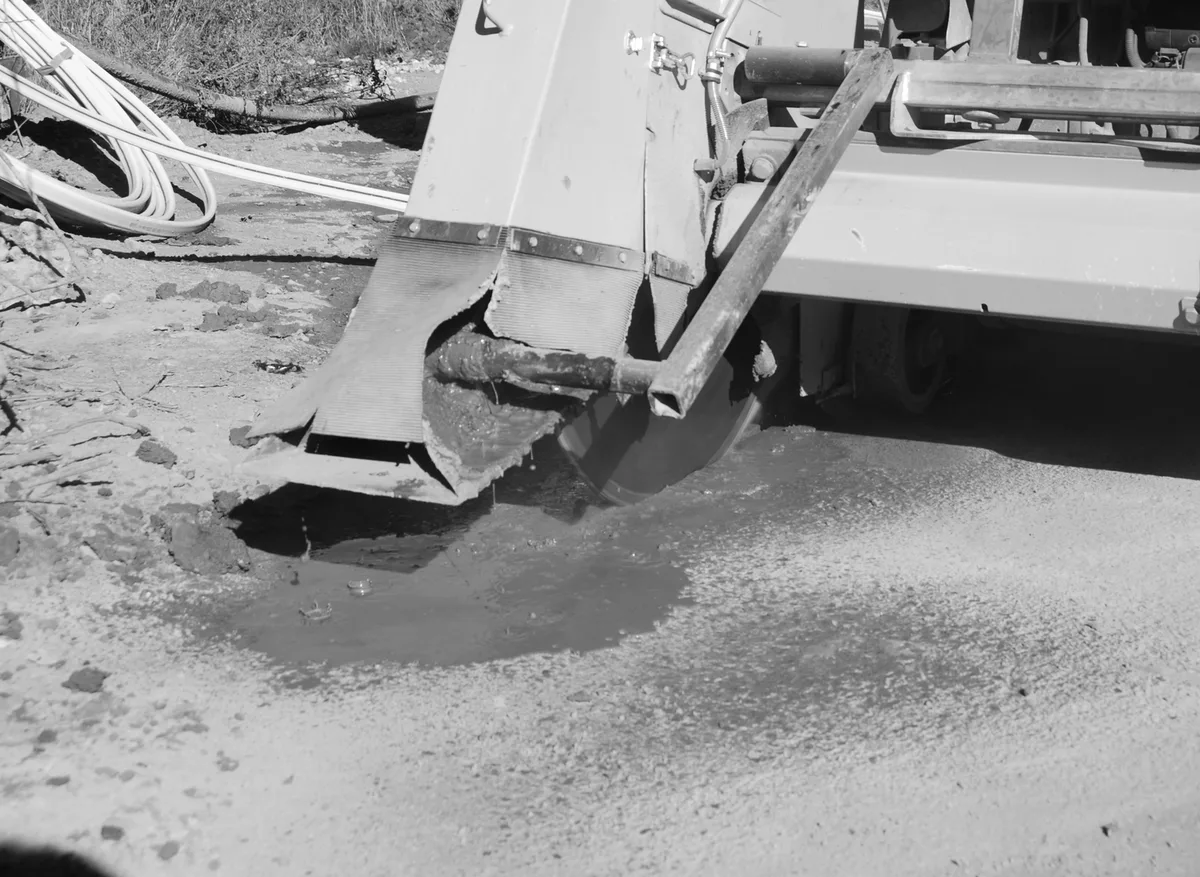
A traditional excavation site in a town centre closes a street for days: subgrade removed to a depth of one metre, heavy plant, barriers. The same stretch, done by micro-trenching, closes in hours. For a business waiting for its connection, or a public body that must meet the deadlines of a public tender, the difference is not just about the worksite: it is useful time gained. But the faster technique does not do away with permits. It shifts them, and changes what needs to be checked before signing.
A decree, not a worksite habit
In 2013 the Italian State gave precise regulatory status to what worksites were already calling, informally, “narrow trenching”. The Decree of the Ministry of Economic Development of 1 October 2013 (Official Gazette No. 244 of 17 October 2013, in force from 1 November) sets out the technical specifications for excavation and reinstatement when laying digital infrastructure in roads. Alongside traditional excavation, it introduces low-environmental-impact technologies: controlled horizontal directional drilling and mini-trenching, with differentiated obligations for urban roads, extra-urban roads and motorways. A practical point that is often overlooked: the decree requires the infrastructure to be laid outside the carriageway wherever technically feasible — not underneath moving traffic.
The decree defines low-impact excavation within a precise dimensional range: width from a minimum of 3 cm to a maximum of 20 cm, maximum depth 50 cm — a fraction of the cross-section of a traditional trench for pipes and cable ducts.
Micro-trenching is not a synonym for mini-trenching
On site, the two terms are used interchangeably. They are not really synonyms, and the difference matters when reading a quote. The decree regulates a single category of low-impact excavation for fibre laid in the road, within the range already mentioned. In current practice, operators use “micro-trenching” for the narrower, shallower band — a few centimetres wide, a few decimetres deep, suited to pavements and pedestrian areas — and “mini-trenching” for the wider band, up to the 20 cm limit, used where more than one microduct needs to be housed. Whoever proposes a quote using one term or the other is describing the same regulatory family, not two different regimes. The right question is not “which decree”, but “what dimensions are you asking to have authorised, and on which stretch of road”.
The permit does not disappear, only who grants it changes
A smaller trench does not mean an unauthorised one. The permit for interference with public land, issued by the body that owns the road — the municipality, the province, or the motorway operator — is still required, with timescales that depend on that body, not on the technique chosen. What does change is the complexity of the review: a low-impact route affects fewer existing utilities and makes it easier to coexist with other operators working on the same street.
This is where AGCOM, Italy’s communications regulator, comes in. Resolution No. 452/22/CONS (December 2022), which approves the guidelines on the development of digital infrastructure, requires every physical infrastructure operator and network operator to meet, on transparent and non-discriminatory terms, reasonable requests for coordination of civil engineering works — particularly when the works are financed, even in part, with public funds, as often happens on ultra-broadband plan sites. In practice: if a body is already digging for another utility in the same street, a network operator can ask to share the trench. For anyone planning a project, this translates into a check worth making in good time: are there works under way in the same street that could be coordinated? It saves both permits and a second worksite.
Reinstatement is where the job is won or lost
Low-impact excavation is quick; reinstating the road surface remains the most delicate step, and is almost always the leading cause of disputes with the bodies that own the road. Reinstatement typically takes place in two distinct phases: a provisional one, immediately after the microduct is laid, and a permanent one, once the backfill has settled. Skipping this step — laying the final asphalt straight away over ground that has not consolidated — produces the classic cracking and dips that reappear after a few months, with the authority then demanding that whoever dug the trench redo the work. A proper specification always sets out the two phases in writing: whoever commissions the work should insist on this before the site opens, not discover it at final testing.
When it makes sense, for a business or a public body
Low-impact laying makes sense when the route runs over public land managed by a third party — from a company gate to the operator’s manhole, from a public building to a neighbourhood backbone — and when road-closure times are a real constraint: pedestrian areas, historic centres, hospital grounds, campuses with continuous internal traffic. It makes less sense in a fenced private area, where traditional excavation is often still easier to authorise. In both cases, the choice of technique is best made on a site survey, not once the quote has been signed.
What to do
- Always ask for the exact excavation dimensions proposed (width, depth) and check that they fall within the limits of the Ministerial Decree of 1 October 2013.
- Check who issues the interference permit (municipality, province, motorway operator) and its typical timescales, before setting a delivery date.
- Ask whether there are works that could be coordinated in the same street: AGCOM Resolution 452/22/CONS gives you the right to request this.
- Insist that the specification includes both reinstatement phases, provisional and permanent, with written responsibility in case of any subsequent subsidence.
- Have every buried stretch followed by OTDR certification: the trench closes up, but the route stays in place for years.
The bottom line
Low-impact technique has made fibre faster to lay in the road; it has not made permits easier to obtain, nor reinstatement any less important. That is why we handle the whole chain — from the backbone through to the in-building cabling — from site survey to final testing, both on projects for public administration and for telecommunications operators.
Do you need to have a fibre stretch laid on public land, or plan the permits for a worksite before they become a problem? Contact us: free site survey and quote, with the right excavation technique for your case.