What gets inspected in a telecoms manhole? ITU-T L.340, item by item
7 min read
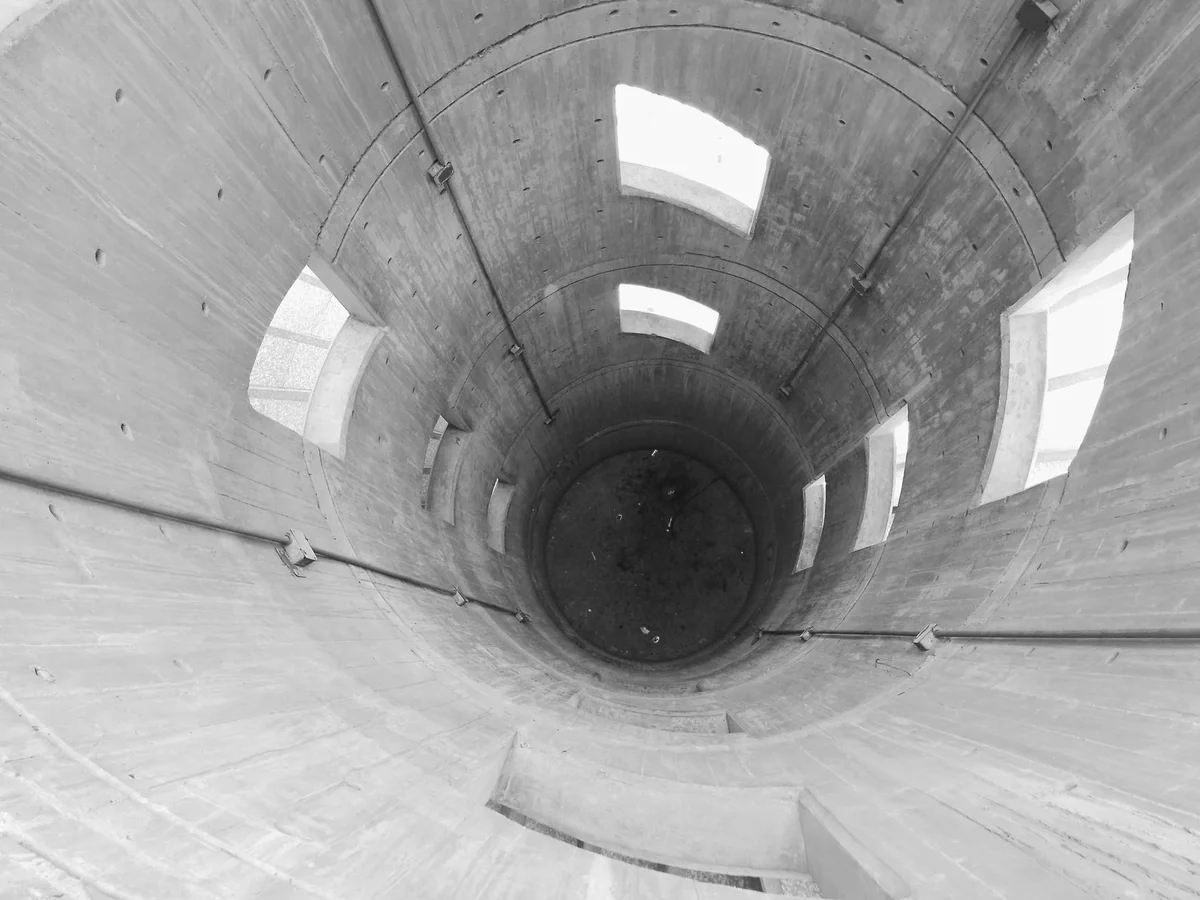
When was your manhole at number X last inspected? Who went in? What did they find? And what happened afterwards? For most underground networks none of those four questions has a ready answer — not because the data is missing, but because, when it exists, it sits scattered across six places, none of them enough alone.
What ITU-T L.340 is
ITU-T Recommendation L.340 (06/2023), “Maintenance of underground telecommunication facilities”, approved on 13 June 2023 by Study Group 15, goes into the detail ITU-T L.330 leaves open: L.330 covers safety management in general, this one sets out technologies and countermeasures, facility by facility. The Scope: “This Recommendation describes detailed inspection technologies and countermeasures in case of deterioration of underground telecommunication facilities such as tunnels, maintenance holes and handholes.”
What gets checked
Clause 6 opens by comparing underground assets to other public infrastructure: “Like other public infrastructures such as bridges, roads and buildings, underground telecommunication facilities experience problems caused by cracks or water leakage as a result of deterioration of steel-reinforced concrete or the rebar itself.”
Table 2 splits the inspection of manholes and handholes into two parts. Concrete frame, periodic inspection: cracks, water leakage, exposed rebar with its length, surface damage; precise inspection, in addition: rebar cover depth, carbonation depth, concrete strength, chloride content. Cover: abrasion, crack, rattle, level difference — periodic only, no precise inspection is specified.
How it gets inspected
Table 3 lists the technologies:
- visual inspection — a sketch or digital image, a crack gauge with magnifier for cracks, callipers for abrasion and level difference; can be replaced by non-entry inspection with remote cameras;
- phenolphthalein indicator on a concrete core, for carbonation depth: a purple-red colour where the concrete is still alkaline, none where carbonation has reached it;
- infrared thermography, for voids and water leakage, reading the wall’s thermal radiation;
- coring with compressive testing, or the surface hardness (rebound) method, for concrete strength;
- ultrasonic pulse velocity and stress wave propagation, non-destructive (NDE) methods for cracks and voids inside the lining;
- ground penetrating radar (GPR): 900–2,000 MHz pulses — higher frequency, better resolution, less penetration — to map voids and thickness variations behind the lining.
Countermeasures, and the safety rules a spec always forgets
L.340 (clause 6.4) first sorts cracks by type — no water, some moisture, water leakage, accompanied by rebar corrosion, joint cracks — and by width: fine, under 1 mm; medium, 1–2 mm; wide, over 2 mm. Whether to repair is a qualified engineer’s call. On water leakage: cases of it recurring after repair are frequent, so the countermeasure has to be weighed on effectiveness, workability, cost and durability.
Clause 6.5, on safety, is the part a specification almost always skips: a sign at the tunnel entrance; a safety fence for manholes and handholes; and — because underground facilities can accumulate toxic gases such as carbon monoxide — a ventilator checked before entering a tunnel, ventilation ensured and a gas detector used before entering a manhole, which is a confined space.
The record that does not live in one place
L.340 defines inspection this way: “An examination of the soundness of a telecommunication infrastructure facility based on a comparison of the investigation, observation and measurement results to the appropriate judgement standards.” Comparison is the key word. A 0.4 mm crack says almost nothing on its own; it says a great deal if it measured 0.2 mm three years earlier, in the same manhole. Rebar corrosion photographed today has to be checked against the previous photograph to know whether it is advancing or stable. Deterioration in an underground asset is cumulative: without history, a single inspection is a snapshot, not a diagnosis.
And today that history is scattered. The inspection record, if it exists, sits in a paper file or a PDF on an engineer’s laptop. The manhole’s location sits in the municipal register or in SINFI, Italy’s utilities register. The cables running through it sit in the as-built record, if anyone keeps it updated — the same discipline we ask for splice closures. OTDR measurements taken after a nearby fault sit in a different system, the one for splice water-ingress sensors. The dig permit sits in the council’s files, alongside the laying permits. The promised inspection frequency sits in the maintenance contract, in administration. Six places, and none of them answers the four opening questions on its own.
How often? The appendix, not the rule
The main body stays deliberately generic on frequency (clause 6.1.3): “It is recommended that the frequency of inspection be determined by the type and current state of the underground facilities concerned, and the changes in the operating environment.” No figures.
The figures appear in Appendix I, “Experience with maintenance of cable tunnels in the Republic of Korea”: routine inspection monthly or yearly (manager); periodic inspection every two years (specialist); precise inspection every five years, ten years after construction, or when a critical defect is found. But the ITU-T says so at the start of both: “This appendix does not form an integral part of this Recommendation”. Documented experience from South Korea, not a requirement — still less one for Italy.
Inspecting without going in
Appendix II starts from a practical problem: entering a manhole needs the safety measures just described, plus the time to pump out condensation water and ventilate. Three ways to avoid it, by photographing the top slab from outside:
- a camera on a robotic arm, scanning up close and merging several images;
- a drone, flying inside without contact at any depth, subject to flight regulations in dense urban areas;
- an omni-directional camera with a fisheye lens, capturing the whole inner surface in one pass, limited by distortion when measuring the exact width of a crack.
Not just efficiency: it is a record that does not depend on whoever happened to be looking that day — the same need behind comparing successive inspections.
See the service · Talk to an engineer
What we do not know
Compliance with ITU-T Recommendations is voluntary. The two appendices do not form an integral part of the Recommendation: illustrative material, not a requirement. Appendix I’s experience is a specific national context, South Korea, and we do not carry it over to Italy as an obligation. We have not found — and we neither state nor rule out, because we have not checked an Italian primary source — a rule setting an inspection frequency for telecoms manholes in Italy. Anyone wanting that frequency written down and verifiable has to write it themselves, into the maintenance specification.
Two threads, on this subject
First thread: the inspection items, the technologies used to measure them and the repair criteria become lines in the maintenance specification — who inspects, with what technology, how often, in what format the record is delivered — in a single archive, not the laptop of whoever wrote it. At acceptance, the check is that the records exist, tied to a unique identifier for the asset.
Second thread: the inspection record, the register, the as-built, the OTDR traces and the dig permits become, with CSIDIA, the group’s other company, a single map of the network on which an AI runs the diagnosis and the crew closes the fault. On the deterioration of an underground asset, the diagnosis is not reading one inspection: it is comparing successive inspections tied to the same identifier — the same definition of “inspection” L.340 itself gives. Within the client’s perimeter: on-premise, on standalone machines with no deep integration, or a dedicated cloud with a data centre in Italy, always with shared management.
The site visit, at no cost, produces the list of your underground assets — manholes, handholes, tunnel sections — with, for each one, when it was last inspected, by whom, what was found and where it is written down. Including the boxes that stay blank: it is yours to keep either way, whether or not we go on to work together.