ADSS cable on an electricity pole: which standard goes in the specification?
7 min read
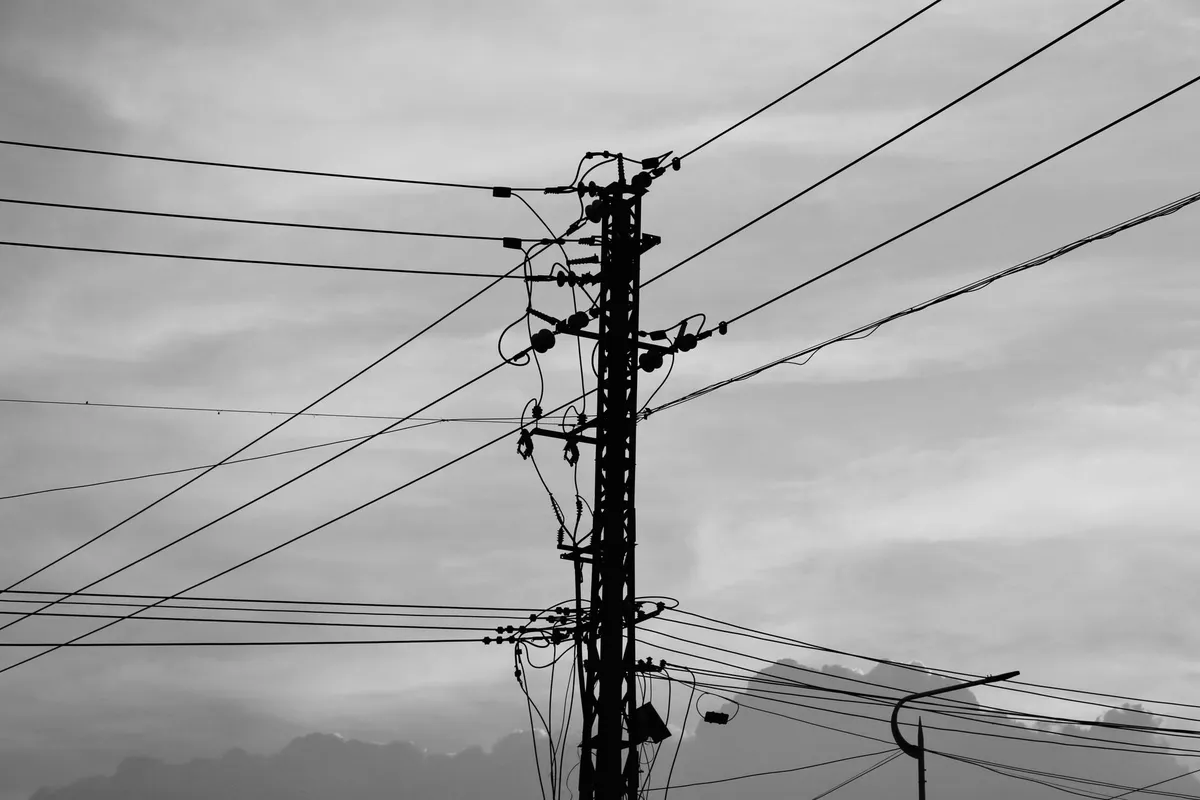
A specification for an aerial run states “ADSS cable to ITU-T L.102”. The reference is correct, and so is the Recommendation — but if that run is strung along a medium- or low-voltage electricity line, the Recommendation cited excludes the case, explicitly, in its own scope. ADSS, All-Dielectric Self-Supporting, does not point to one standard. It points to two separate families, and choosing between them comes before the rest of the specification is written, not after.
Two families, not one.
Recommendation ITU-T L.102, Optical fibre cables for aerial application, edition 4.0 approved on 29 November 2025 (formerly L.26, in force since 1996, redesignated L.102/L.26 in 2015), fixes its scope in the very first clause: cables for aerial installations “which are not used along electrical power lines”. It then adds, verbatim: “Recommendations for the aerial cables used along electrical power lines are currently under study.” For aerial runs along an electricity line, no dedicated ITU-T Recommendation exists yet: that ground is covered by IEC and, in the United States, by IEEE.
The two families, with their respective product standards:
- Not along an electricity line — a telecom pole, a private tower, a non-electrified façade: IEC 60794-3-11:2010 for duct, direct burial and lashed aerial installation; IEC 60794-3-20:2016, the family specification for self-supporting aerial telecommunication cables. These are the two standards L.102 references explicitly.
- Along an electricity line — a medium-, low- or high-voltage pole or tower belonging to a distribution operator: IEC 60794-4:2018, the general sectional specification for aerial optical cables along electrical power lines, with optical, mechanical, environmental and electrical requirements; IEC 60794-4-20:2018, the family specification dedicated specifically to ADSS in this context. In the US the same ground is covered by IEEE 1222:2019.
The reason the electrical case gets its own family is not a drafting choice. The cable sits, for years, close to a live conductor: the 60794-4 sectional specification adds electrical requirements that 3-20, written for poles without that hazard, does not need to carry. Whoever writes the specification for an aerial run answers one question first — does the route run along an electricity pole or not? — and only then picks the standard to cite, not the other way round.
The real case: an electricity operator’s own cable catalogue.
When the run shares an electricity pole, IEC 60794-4-20 is not enough on its own: it defines a product family, not a purchasable catalogue. The owner of the poles — in Italy, across the largest share of the distribution grid, e-distribuzione — publishes its own technical specification listing the cable types it accepts on its infrastructure. The document is GSCF015 Rev.2, April 2019, “Cavo ottico dielettrico autoportante (ADSS) light per posa su palificata BT e MT” (all-dielectric self-supporting light optical cable for installation on low- and medium-voltage pole lines): public, downloadable, its scope stated as Italian territory (façade mounting is also permitted).
It defines nine cable types — one, GSCF015/4 (ADSSL6_BT), appears struck through in the table: revision 2 no longer includes it among the current types, direct proof that it is always worth checking, when reading an older specification, whether the reference cited is still in force. The rest range from 24 to 396 fibres, some approved for low voltage only, others for medium voltage too. Non-metallic central support in fibreglass, grey RAL 7001 UV-resistant polyethylene outer sheath to CEI EN 50290-2-24, single-mode fibre to ITU-T G.657/A1 — the same category discussed here for bend radius, without repeating the figures.
One distinction worth keeping separate: GSCF015 is one operator’s own private specification, not a national standard. If the run will use a different distribution operator’s poles, non-electrical towers, or public lighting poles, this catalogue does not apply: check the technical specification of whichever infrastructure owner you will actually be using, which may set different cable types and figures.
Installation tension and service tension: two figures, not one.
This is where the easiest mistake hides when a data sheet is read too quickly. For the “light” types (ADSSL1, ADSSL2, up to 192 fibres) GSCF015 states a maximum tensile load during installation of 2,300 daN and a maximum applicable tensile load (M.A.T.) of 1,200 daN: the first is a peak tolerated during handling, the second the ceiling the cable can carry once installed.
For the double-armoured, low-voltage-only types (ADSSL3_BT, ADSSL5_BT, ADSSL8_BT), the same acronym shifts its reference point: here the figures are a maximum tensile load in service (M.O.T.) of 300 daN and a maximum applicable tensile load (M.A.T.) of 600 daN — in this table, M.A.T. is the ceiling during installation, not the residual value afterwards. Same acronym, different reference, same document. Before citing a figure in a specification, or comparing two manufacturers’ data sheets, check which state — installation or permanent service — that figure actually describes.
One figure the document does not state, and not by oversight: maximum span, in metres. It depends on the cable’s weight, the wind and ice load of the area, the electrical clearances required by the operator, and the elastic-modulus (EA ≥ 168,000 daN for the light types) and thermal-expansion figures given on the data sheet. Span is calculated at design stage, run by run: whoever fixes it upfront in a specification has not calculated it — they have guessed it.
At acceptance testing: the marking, not just the cable.
GSCF015 requires an indelible metric marking every 1 metre, carrying the manufacturer’s mark, fibre count, operator name, month and year, an individual fibre identification number and a sequential metric marking — and it must withstand abrasion under method E2B of IEC 60794-1-21:2015. It is a check that costs a minute and is done by eye: after installation, the marking must still be legible. If it has worn away during pulling over the rollers, something else on that run has probably suffered more than the record shows.
What to write in the specification.
- State whether the aerial route runs along medium- or low-voltage electrical infrastructure or on non-electrical poles: the standard family changes, IEC 60794-4-20 versus IEC 60794-3-20 and ITU-T L.102.
- If electrical, cite the cable type from the pole owner’s own catalogue — exact name and revision, not a generic “ADSS to IEC”.
- Have the maximum installation tension and the maximum permanent service tension declared separately, stating which of the two each figure refers to.
- Ask for the span calculated for that specific run, not a generic catalogue value.
- Specify the fibre sub-category required, not just “G.657” — here is why it matters.
- At acceptance testing, check that the metric marking is still legible after installation.
The point.
Aerial deployment on an electricity pole is not a cheaper variant of underground installation: it is a different chapter of standards altogether, with an infrastructure owner setting its own rules before international standards even come into play. Where trenching requires permits from the local council, sharing an electricity pole requires access granted by the network operator — and the cable catalogue that operator accepts is the first thing to read, not the last. It is part of how we design an aerial run and how we write the right figures into a specification, for telecommunications operators who need to reach an area without opening a trench.
Do you have a run that needs to share an electricity pole and are not sure which standard family to cite? Talk to an engineer: checking the operator’s cable catalogue is part of every site survey, free of charge.
Sources
- ITU-T L.102 (11/2025) — Optical fibre cables for aerial application
- IEC 60794-4-20:2018 — Family specification for ADSS optical cables along electrical power lines
- IEC 60794-3-20:2016 — Family specification for self-supporting aerial telecommunication cables
- e-distribuzione, GSCF015 Rev.2 (04/2019) — All-dielectric self-supporting (ADSS) light optical cable for installation on low- and medium-voltage pole lines