Wells, excavations and tunnels: the safety clauses a specification must set before the trench closes
7 min read
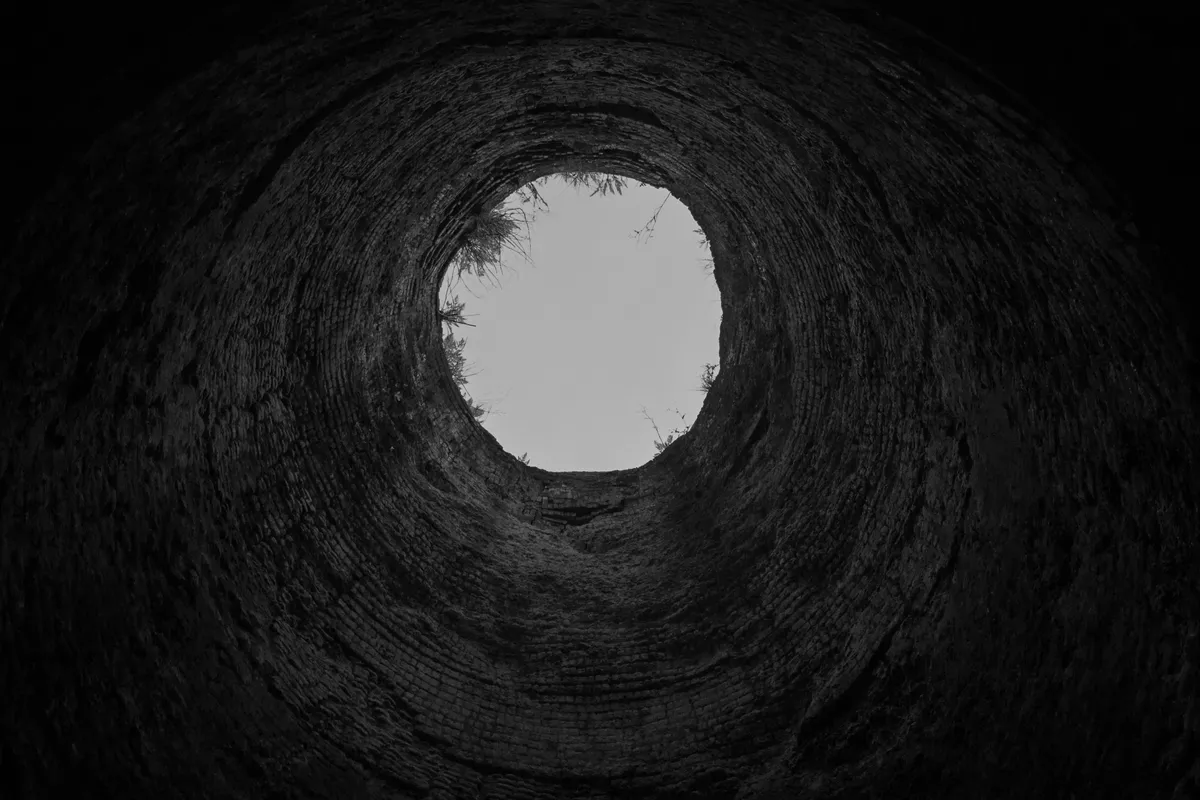
The manhole along the backbone route, between two towns in Emilia, goes past three metres deep: beneath a thirty-year-old sewer line, the design places the new fibre chamber. The crew digs, shores the walls, pulls the cable, backfills, reinstates the asphalt. Three weeks later the works supervisor asks for proof that the shoring was put in as the excavation went down — not just in the last metre, before backfill. Nobody can reopen that trench to check any more. The proof, if it exists, is not in the ground: it is in the paperwork, and nobody asked for it in writing before the site opened.
Section III, not a generic heading
The rules do not sit in one article you can quote from memory. Legislative Decree 9 April 2008, no. 81 devotes Title IV to temporary or mobile construction sites; Chapter II — Rules for the prevention of workplace accidents in building and work-at-height — splits into eight sections, and Section III, articles 118-121, is titled Excavations and foundations. It is distinct from the confined-spaces piece we have already covered: there the question was who may enter a manhole that is already closed; here it is how the trench that leads to it must be dug, shored and backfilled, before anyone even goes in.
Article 119: shoring goes in as digging proceeds, not once the work is done
The article that carries the most weight in a laying specification is 119, Wells, excavations and tunnels. Paragraph 1 leaves no room on when: In excavating wells and trenches deeper than 1.50 m, where the ground’s consistency does not give sufficient guarantee of stability, also in relation to the slope of the walls, the necessary support shoring must be applied as the excavation proceeds. Not at the end of the day, not before backfill: while it happens, dig after dig. Paragraph 2 sets a concrete measure: The wall-lining boards must project at least 30 centimetres from the edges of the excavation.
Paragraph 6 raises the bar for foundation wells: beyond 3 metres deep, a sturdy platform with an opening for the bucket to pass through must be provided, to protect the workers digging and removing the excavated material. Paragraph 7 concerns whoever stays outside, not just whoever digs: Wells and tunnels must have adequate assistance provided from the outside, and their dimensions must allow the recovery of an unconscious injured worker. A paragraph 7-bis, inserted after the original 2008 text, adds that lifting material out of excavations must be carried out in accordance with point 3.4 of Annex XVIII: a cross-reference we have not followed, since we have not read that annex.
Article 118: the wall, the edge, the excavator’s reach
Article 118, Levelling and cutting, looks at the excavation wall before it even becomes a narrow trench: the walls of the working faces must have a slope or line such, in relation to the nature of the ground, as to prevent collapse, and beyond 1.50 m in height manual excavation by undercutting the base is prohibited. Paragraph 3 concerns whoever works near the machine — the common case when a fibre trench runs alongside a wider excavation for other utilities: workers must be barred from the excavator’s working radius and from the edge of the working face.
The trench edge, and wells with gas
Article 120 closes a gap that looks obvious until you see it broken on a real site: Storing materials near the edge of excavations is prohibited. Where such storage is necessary for working conditions, the necessary shoring must be provided. Excavated spoil piled at the trench edge, waiting for the lorry, is close to standard practice on laying sites — exactly what the article bans without shoring underneath it.
Article 121 concerns the deeper wells and tunnels, where fibre crosses existing chambers and collectors: When work is carried out inside wells, sewers, tunnels, flues and pits generally, suitable measures must be adopted against the dangers arising from toxic, asphyxiating, flammable or explosive gases or vapours […] Where the risk is confirmed, workers must be fitted with suitable personal protective equipment connected to a suitable rescue system, which must be kept outside by the staff assigned to watch duty — the same outside assistance already seen in Article 119, here for chemical risk rather than collapse.
A threshold the digging technique can sidestep
The 1.50 m threshold that triggers shoring is not indifferent to the technique chosen. The decree on micro-trenching and mini-trenching sets a maximum depth of 50 cm for reduced-impact excavation, that is below that threshold. This is a comparison of our own, not written in either rule: whoever chooses micro-trenching stays, for that stretch, outside the scope of articles 118-119; whoever digs a traditional manhole or chamber, almost always beyond 1.50 m or 3 m, falls back inside it.
The record that no single system holds in full
That the shoring was actually applied as digging proceeded, not only in the last stretch before backfill, is not something the specification signed at tender states: that fixes the obligation, not proof it was met. The proof, if it exists, sits split across five or six different places. The health and safety plan — or the contractor’s own operational safety plan, where no coordinator is appointed — describes how the dig should proceed, not how it actually did that day. The site log, where one exists, records the phases worked but rarely the depth reached hour by hour. The site supervisor’s photographs — often on a personal phone, not in a shared archive — are the only visual proof the shoring was in place while the excavation went down. The hire firm’s equipment record sits with the supplier; worker training sits in the employer’s file; and the as-built record records where the manhole is, not how the ground was dug to reach it.
Once the asphalt is reinstated, the ground itself stops being evidence: the wall’s slope, the shoring set layer by layer, the spoil kept clear of the edge are no longer physically checkable by anyone. All that remains is whatever someone wrote down or photographed while it happened. If nobody did, the backfilled trench proves neither compliance nor breach: it proves only that today, nobody knows.
See the service · Talk to an engineer
What we have not verified
This is not legal advice on workplace safety. We have not read the text of Annex XVIII, point 3.4, referenced by paragraph 7-bis of Article 119, nor do we know which act inserted that paragraph or when: the article’s amendment-history page, on the portal, did not return a usable answer. We do not repeat here the boundary — already covered elsewhere — between routine maintenance and building or civil-engineering work that triggers Title IV: that remains a case-by-case assessment. We have not verified the penalty regime tied to these articles. And the comparison between the 1.50 m threshold and mini-trenching’s depth limit is a pairing of our own between two rules read separately: neither cites the other.
Two threads, on this subject
The thresholds in articles 118-121 — 1.50 m, 30 cm, 3 m, outside assistance, the ban on unshored storage at the edge — become clauses written into the excavation specification, with the contractor required to document, not just declare, that shoring was applied while the dig advanced: dated, geotagged photos for every stretch, not only at the end of the job. At acceptance, the check is that documentation exists before the final road surface is reinstated — while the trench is still physically checkable, not after.
The safety plan, site log, dig photographs, shoring records and as-built become, with CSIDIA, the group’s other company, a single map on which an AI flags, site by site, which stretches have complete shoring documentation and which do not — before the asphalt lorry arrives, not after. Within the client’s perimeter: on-premise or a dedicated cloud with a data centre in Italy, always with our own crews, no subcontracting.
A stretch of excavation that has to go past 1.50 metres deep, or a manhole beyond 3 metres? Talk to an engineer: the site visit is free, and the clause requiring in-progress photographic documentation gets written before the site opens, not while it is being backfilled.
Sources
- Normattiva — Legislative Decree 9 April 2008, no. 81, art. 118 (Levelling and cutting)
- Normattiva — Legislative Decree 9 April 2008, no. 81, art. 119 (Wells, excavations and tunnels)
- Normattiva — Legislative Decree 9 April 2008, no. 81, art. 120 (Storing materials near excavations)
- Normattiva — Legislative Decree 9 April 2008, no. 81, art. 121 (Gas in excavations)