EN 50600: the four availability classes for a data centre
5 min read
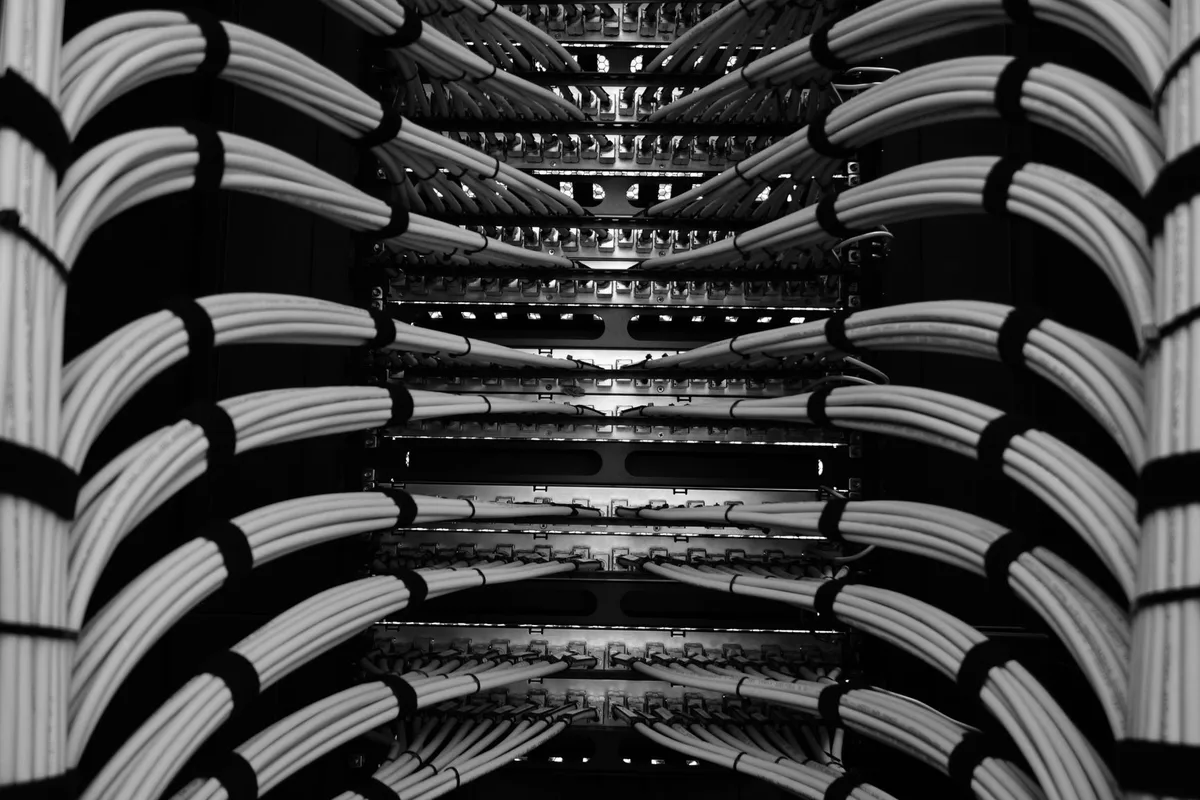
Italy’s data centre market is racing ahead: record investment, Milan heading towards the gigawatt mark, as we wrote here. But while the big campuses make headlines, thousands of businesses face a smaller, far more common decision: building or upgrading their in-house server room. Three racks, ten, thirty. Here the risk isn’t scale — it’s a specification written from memory, or copied from whichever supplier happened to be on hand. For years there has been a European reference designed for exactly this: the EN 50600 series (Information technology — Data centre facilities and infrastructures), which by its own stated scope covers data centres of every shape and size — from one or more cabinets in an existing building through to purpose-built facilities.
How the series is structured: a quick map
EN 50600 isn’t a single standard — it’s a family. The main parts:
- EN 50600-1 — general concepts: sets out the framework and the data centre’s overall availability class;
- EN 50600-2-1 — building construction (site selection, construction requirements);
- EN 50600-2-2 — power supply and distribution;
- EN 50600-2-3 — environmental control (cooling and room conditions);
- EN 50600-2-4 — telecommunications cabling infrastructure;
- EN 50600-2-5 — physical security (protection classes against unauthorised access, fire, and internal and external environmental events);
- EN 50600-3-1 — management and operational information;
- EN 50600-4-x series — performance indicators: PUE, for example, is standardised in EN 50600-4-2;
- CLC/TR 50600-99-x — recommended practices for energy management (99-1), environmental sustainability (99-2), and guidance on applying the whole series (99-3).
The series has also been adopted internationally by ISO/IEC as the ISO/IEC 22237 series: anyone working with clients abroad is speaking the same language.
The four availability classes
At the design heart of the series are the availability classes from 1 to 4, defined separately for three infrastructures: power distribution (2-2), environmental control (2-3), and cabling (2-4). In brief:
- Class 1 — single distribution path, single components. One fault stops everything.
- Class 2 — single path but with redundant components or sources. Covers the failure of a component, not of the path.
- Class 3 — multiple paths: maintenance or repairs can be carried out without stopping operations.
- Class 4 — multiple active paths, single-fault tolerance except during maintenance.
The point many specifications overlook: EN 50600-1 assigns the data centre the lowest class among the three infrastructures. A Class 3 redundant electrical system paired with Class 1 cabling gives a Class 1 server room. The chain is only as strong as its weakest link — and in our experience, the neglected link is almost always the cabling.
Cabling: where EN 50600 hands off to the trade standards
EN 50600-2-4 covers all of the data centre’s cabling: not just LAN and SAN, but also the cabling that supports power monitoring, environmental control, and physical security, plus the pathways, spaces, and enclosures that house it. For design, it refers back to the generic cabling standards — in particular EN 50173-5 (structured cabling for data centres, in balanced copper and optical fibre) — and for installation to the EN 50174 series (installation specification and quality assurance in Part 1, planning and installation in buildings in Part 2).
Cabling, too, has its four classes: from a single path with a single network entry (Class 1) up to diversified pathways, redundant distribution zones, and multiple network entries (Class 4). Translated onto the job site: two fibre feeds entering the building at different points, backbones that don’t share the same cable tray, patching that’s ordered and documented. And an implicit requirement that we make explicit: every run tested and certified with an OTDR, because redundancy on paper is worthless if one of the two routes has mediocre splices.
Why it applies to the micro server room too
“We’re hardly a data centre”: it’s the usual objection. The standard says otherwise — the series also applies to one or more cabinets in an existing building. And the timing is right: as national capacity booms, colocation, hybrid models, and corporate edge deployments are all growing, and the in-house server room remains the node that ties everything together. There’s no need to push every room to Class 4 — that would be money wasted. What’s needed is to choose the class deliberately, based on what an hour of downtime actually costs, and to put it in writing in the specification. That’s the difference between buying redundancy at random and buying it where it pays off. In the rooms we look after, the most useful conversation with management is exactly this: which class for power, which for climate control, which for cabling.
Checklist: the questions to put in the specification
- What target availability class for each infrastructure (power, climate, cabling)? Who decided it, and on what risk analysis?
- Are the pathways genuinely independent? Two routes sharing a cable tray, a service duct, or an entry point aren’t two routes.
- Is the cabling designed to EN 50173-5 and installed to EN 50174? Ask for the explicit reference, not “to best practice”.
- How many network entries come into the building, and from which directions?
- Are the physical protection classes (EN 50600-2-5) for rooms, pathways, and spaces clearly defined?
- Is certification of every run included, with reports delivered (OTDR for fibre), labelling, and as-built documentation?
- How will maintenance without downtime be carried out — and who has verified it on the actual design, not just on the diagram?
Seven questions, an afternoon’s work at the design stage. The alternative is finding out the answer during the first serious fault.
Planning or upgrading a server room, small or large? Talk to a technician: a free site visit and quote, and an honest opinion on which class you actually need.