Which CAM applies to a fibre network installation and testing tender?
8 min read
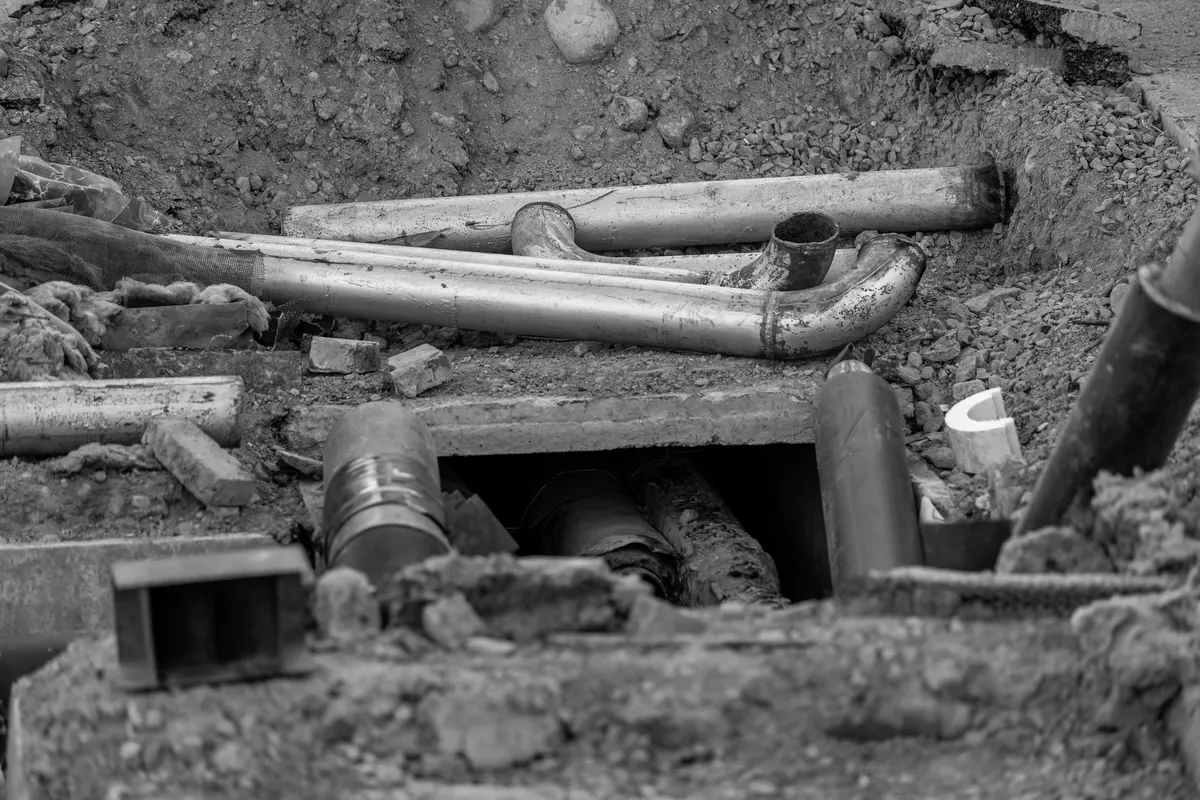
The specification for ten kilometres of fibre backbone between two public-sector sites is almost ready: optical thresholds, maximum duct pulling tension, OTDR testing are already written. One line is missing that nobody quite knows how to fill in: which minimum environmental criterion applies to work that is neither a building nor a computer? Searches for fibre-optic CAM and telecommunications-network CAM turn up nothing. The tender deadline is close, and the CAM box stays blank — not because nobody looked, but because the answer does not sit in a single decree.
The obligation, paragraph by paragraph
Article 57 of Legislative Decree 31 March 2023, no. 36 — Italy’s Public Contracts Code — is not only about the environment: its heading, quoting the Italian text, is «Clausole sociali dei bandi di gara, degli avvisi e degli inviti e criteri di sostenibilità energetica e ambientale» (social clauses in tenders, and energy and environmental sustainability criteria). Paragraph 2 sets the obligation at issue: contracting authorities «contribuiscono al conseguimento degli obiettivi ambientali previsti dal Piano d’azione per la sostenibilità ambientale dei consumi nel settore della pubblica amministrazione attraverso l’inserimento, nella documentazione progettuale e di gara, almeno delle specifiche tecniche e delle clausole contrattuali contenute nei criteri ambientali minimi» — contribute to the environmental goals of the national action plan by inserting, in the design and tender documentation, at least the specifications and clauses of the minimum environmental criteria. Not a principle to cite in one line: a specific decree’s clauses, written into the tender file.
The knot sits in the next clause: CAM criteria are «definiti per specifiche categorie di appalti e concessioni» — defined for specific categories of contracts — by decree of the Ministry of the Environment and Energy Security. CAM is not one principle but a catalogue of decrees, one per category — and no category is named for a fibre network.
No CAM is written for fibre
The official list of CAM in force covers building works, road infrastructure, public lighting, vehicles, textiles, urban waste and other categories: no line covers telecommunications networks, cabling or fibre-optic installation. There is no ready decree to cite: it must be pieced together from two categories written for something else.
Building works, by elimination — but with a criterion written for the case
The CAM for building works, adopted by decree of 24 November 2025 and published in the Official Gazette, General Series no. 281 of 3 December 2025, in force from 2 February 2026, replaces the 2022 edition (decree no. 256 of 23 June 2022, Official Gazette no. 183 of 6 August 2022), folding in its 5 August 2024 amending decree. It does not stop at buildings: its scope extends «ai lavori e servizi per qualsiasi tipo di manufatto o opera nelle more della pubblicazione di eventuali CAM per specifiche tipologie di opere o manufatti» — to works and services for any type of structure, pending publication of a CAM specific to that type. A stand-in clause: until a CAM exists for a given type of work, the building-works one applies — and for fibre, none exists.
The document goes further. Criterion 2.2.6, «Sottoservizi per infrastrutture tecnologiche» (Underground services for technological infrastructure), applies «alle aree di pertinenza di edifici, manufatti e opere e alle aree pubbliche, in caso di realizzazione, ampliamento o riqualificazione delle reti tecnologiche nel sottosuolo» — to land around buildings and works, and to public land, when underground technological networks are built, extended or upgraded — and requires: «Il progetto deve prevedere apposite canalizzazioni interrate in cui concentrare tutte le reti tecnologiche previste, per una migliore gestione dello spazio nel sottosuolo» — the design must provide dedicated buried ducting concentrating all planned networks, for better use of underground space. A design requirement: shared ducts sized for future extensions, not one pipe per network on its own account — exactly what the opening trench lacks. The proof required, though, stays light: the same design report under criterion 2.1.1, explaining how the design accounted for shared ducting — not an independent test report, not a product label.
The same requirement exists in the road-infrastructure CAM (decree of 5 August 2024, amended 11 September 2025), but with different force. Criterion 2.2.1, on systems against traffic pollution, says «Tali sistemi possono includere» — such systems may include — then lists «canalizzazioni in cui collocare tutte le reti tecnologiche previste, per una corretta gestione dello spazio nel sottosuolo», ducting to hold all planned networks, «prevedendo anche una sezione maggiore da destinare a futuri ampliamenti delle reti», with a larger cross-section for future extensions. In building works the design must provide it; on the road it may.
Active equipment is left out: the ICT CAM stops at the desktop
For cabinets, switches, ODFs and other active equipment, the CAM that comes to mind is the one for electrical and electronic equipment. But the decree in force — adopted 11 March 2026, Official Gazette, General Series no. 70 of 25 March 2026 — states its field without ambiguity: «I criteri ambientali definiti con il presente documento si applicano a computer da tavolo, computer da tavolo integrati, desktop thin client, mobile thin client, notebook, tablet e slate, ai monitor e agli smartphone» — the criteria apply to desktop computers, thin clients, notebooks, tablets and slates, monitors and smartphones. A patch cabinet or a switch is not on that list. Citing the ICT CAM for a network’s active equipment cites a decree that governs the workstation, not the network connecting it.
What to demand as proof, not as a declaration
The CAM method, set out in the same document, leaves no room for a generic declaration: «I mezzi di verifica consistono principalmente nella presentazione di etichette ambientali o di certificati, rapporti di prova o altra documentazione tecnica» — verification means mainly submitting environmental labels, certificates, test reports or other technical documentation. Carry that into every clause — even where, as for underground services, the decree settles for a design report: a stronger proof has to be written in, not expected from the CAM.
What to write in the specification
- State which CAM applies to which part of the supply: building works (decree of 24 November 2025) for trenching, ducts and underground services; no CAM for active equipment or the fibre cable — say so explicitly.
- Cite criterion 2.2.6 for any new buried ducting, and require the design report to state the sizing for future extensions.
- Specify the means of proof for every criterion cited — label, certificate, test report or design report — not a generic CAM-compliance declaration with no reference to the criterion.
- State which decree governs which portion of the trench: on road land shared ducting is suggested, not required; the two CAM do not combine on their own.
- Update the reference for every tender: the 2022 building-works CAM was replaced by the 2025 edition, in force from 2 February 2026; citing decree 256/2022 as current text cites a superseded act.
How to check it at acceptance
During execution, the works management checks that the means of proof declared in the bid match the criteria cited: the design report for underground services, the test reports or labels for construction products in chambers and ducting, where required — the excavation thresholds for wells and ducts stay a separate chapter, not replaced by the CAM. A specification that just states compliant with the CAM, with no decree, criterion or proof, leaves nothing to check: only a sentence.
See the service · Talk to an engineer
What we haven’t verified
We have not verified how the two decrees coordinate where their scopes overlap. We have not verified whether ANAC guidance exists for mixed contracts matching no single CAM category. The list of CAM in force changes: this is current as of September 2026, and should be rechecked for every tender.
Two pillars, applied here
The criterion cited, the design report grounding it and the test reports on construction products become, with CSIDIA, the group’s other company, a single map on which an AI checks, before the tender goes out, whether every criterion cited genuinely has its means of proof — not just the line that cites it. It is the same approach for public-sector bodies. Within the client’s own perimeter: on-premises on self-contained machines, or a dedicated cloud with a data centre in Italy, always with shared management.
Drafting a specification and unsure which CAM to cite, or accepting work where the CAM is cited but never proven? Talk to an engineer: the site visit is free, and the CAM box gets filled in before the tender goes out, not after the award.
Sources
- Normattiva — Legislative Decree 31 March 2023, no. 36, art. 57 (social clauses and energy and environmental sustainability criteria)
- MASE — Minimum Environmental Criteria in force, list by category
- MASE — Building-works CAM, 2025 edition (technical annex to the decree of 24 November 2025)
- Official Gazette no. 70 of 25 March 2026 — decree of 11 March 2026, ICT CAM