What does Eca mean on a cable? The seven CPR fire classes and the numbers behind them
6 min read
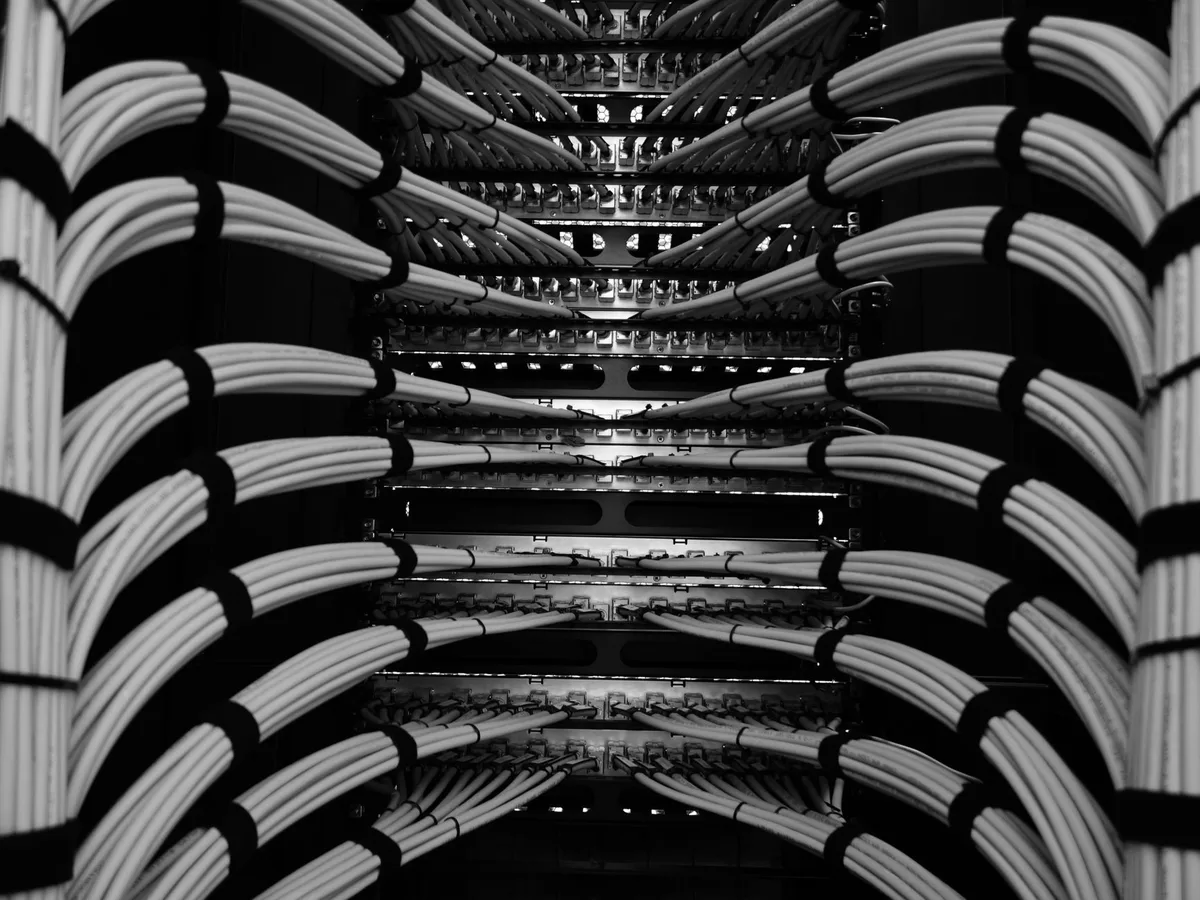
“Cable not propagating fire, to standard” is the line that still appears in many building cabling specifications. Since 2017 that line has identified nothing legally binding: the fire-reaction performance of cables is defined by an EU regulation, with seven precise classes and full codes that must be written out in full, not summarised in an adjective. Anyone who writes or checks a specification — for a public building, a block of flats or a CED server room — needs to know those codes: they decide what can be installed, and who answers for it if something goes wrong.
The legal framework, in three acts.
Regulation (EU) No 305/2011 — the CPR, Construction Products Regulation — sets harmonised conditions for marketing construction products across the Union, cables included: power, control and communication cables, in copper or optical fibre, intended for permanent incorporation into buildings and civil engineering works.
Commission Delegated Regulation (EU) 2016/364 sets out the classification system: the seven fire-reaction classes and the sub-classes for smoke, droplets and acidity, based on the criteria of standard EN 13501-6. The harmonised standard EN 50575 translates all this into a practical obligation: since 1 July 2017, every cable for these applications must carry CE marking and a manufacturer’s Declaration of Performance (DoP), with the declared class on the label. Being a regulation and not a directive, it applies directly in every member state with no national transposition decree: national fire-prevention codes merely set which minimum class is required for which building use.
The seven classes, with the real numbers.
The classes run from Aca (the best) to Fca (no performance determined), all carrying the “ca” (cable) suffix. If your question is which class you actually need and who sets it, that is a different matter and we covered it separately: B2ca vs Cca vs Dca vs Eca: which cable class do you actually need?. Here are the numbers:
- Aca — non-combustibility, assessed under EN ISO 1716: in market practice almost no polymer-insulated cable reaches it; it remains more theoretical than widespread.
- B1ca — THR1200s ≤ 10 MJ, FIGRA ≤ 120 W/s: also rare among common cables.
- B2ca — THR1200s ≤ 15 MJ, FIGRA ≤ 150 W/s, flame spread (FS) ≤ 1.5 m: the class that turns up on critical vertical risers.
- Cca — THR1200s ≤ 30 MJ, FIGRA ≤ 300 W/s, FS ≤ 2 m: the most common standard for backbones and structured cabling in public buildings and data centres.
- Dca — THR1200s ≤ 70 MJ, FIGRA ≤ 1,300 W/s.
- Eca — no measurement of heat released: only the vertical flame-spread test on a single cable, EN 60332-1-2, passed or not. It is the minimum threshold admitted for fixed installation in a building.
- Fca — performance not determined: the cable does not even pass the Eca test.
Classes from B1ca to Dca are measured with the vertical bundle test of EN 50399 (the so-called FIPEC); for Eca a single-cable test is enough. That is a sharp jump in rigour between the two thresholds, and it is the first thing to check when a spec states only “Eca”: it could be a deliberate choice on secondary runs, or a default no one ever discussed.
Smoke, droplets, acidity: the letters almost no one writes.
The full code does not stop at the main letter. Three families of sub-classes complete it:
- Smoke (EN 61034-2): s1a — TSP1200s ≤ 50 m², peak smoke production rate ≤ 0.25 m²/s, light transmittance ≥ 80%; s1b — same smoke values, transmittance 60-80%; s2 — TSP1200s ≤ 400 m², peak ≤ 1.5 m²/s; s3 — no requirement.
- Flaming droplets/particles: d1 — no droplet or particle remaining aflame beyond 10 seconds within the 1,200-second test; d2 — does not meet d1.
- Acidity of gases (EN 60754-2): a1 — conductivity < 2.5 µS/mm and pH > 4.3; a2 — conductivity < 10 µS/mm and pH > 4.3; a3 — no requirement.
A properly written class reads in full: Cca-s1b,d1,a1, not “Cca-class cable”. And this is where the industry’s most common mix-up begins: “halogen-free” (LSZH) describes a composition — low emission of halogens and smoke — it is not automatically a CPR class. An LSZH cable may perfectly well be certified only Eca-s3,d2,a3, if it was never tested to EN 50399. The code should be checked on the DoP, not inferred from the trade name.
Who checks what: the three verification systems.
The regulation assigns a different level of surveillance depending on the class:
- System 1+ (Aca-Cca): the strictest. A notified body carries out the initial type test and continuously monitors factory production control.
- System 3 (Dca-Eca): initial type testing carried out by a notified laboratory, but no ongoing surveillance: consistency over time remains the manufacturer’s responsibility.
- System 4 (Fca): self-declaration, no third party involved.
That is one more practical reason, beyond fire performance, to prefer a Cca class over an Eca one wherever the spec allows it: behind the code sits a different level of independent oversight too.
The mistakes we find in specifications.
- Still citing the old CEI 20-22 (“cable not propagating fire”) as if it were still the only reference: it is the test standard that predates the CPR framework, effectively superseded since 2017.
- Writing only “Cca” or only “LSZH”, without the smoke, droplet and acidity sub-classes: an incomplete code commits the supplier to nothing precise.
- Not requiring the Declaration of Performance, and not checking the CE marking on the sheath at testing and handover.
- Applying the same class to an entire network, without distinguishing vertical risers and escape routes — which need a higher class — from non-critical secondary runs.
What to write in the spec.
- The full code for the required class (e.g. Cca-s1b,d1,a1), never just the main letter.
- A class differentiated by function: B2ca or Cca on risers, crowded premises and escape routes; Eca admitted only on secondary runs, always checking the fire-prevention rules that apply to the building.
- An explicit requirement for CE marking on the sheath and a Declaration of Performance attached to the test documentation.
- No automatic equivalence between “halogen-free”/LSZH and a CPR class: if a class is required, write the code, not just the composition.
- In data centres, consistency between the chosen fire-reaction class and the cabling availability class already set out under EN 50600: fire resistance complements path redundancy, it does not replace it.
- A spot check, at testing, that the code printed on the installed cable matches the specification and the DoP.
The bottom line.
As with splicing, quality is written down before the cable is ordered: a full code costs one extra line, a cable with the wrong class in a riser costs a refit. It is one of the checks we make on every installation project, part of the same approach that always starts from written numbers, never from ritual formulas.
Do you need to write or check the fire-reaction class of cables in a specification? Talk to a technician: reading a DoP takes a few minutes, a wrong class is almost always discovered too late.