Duct transparency: minimum information in ten working days, free space not included
7 min read
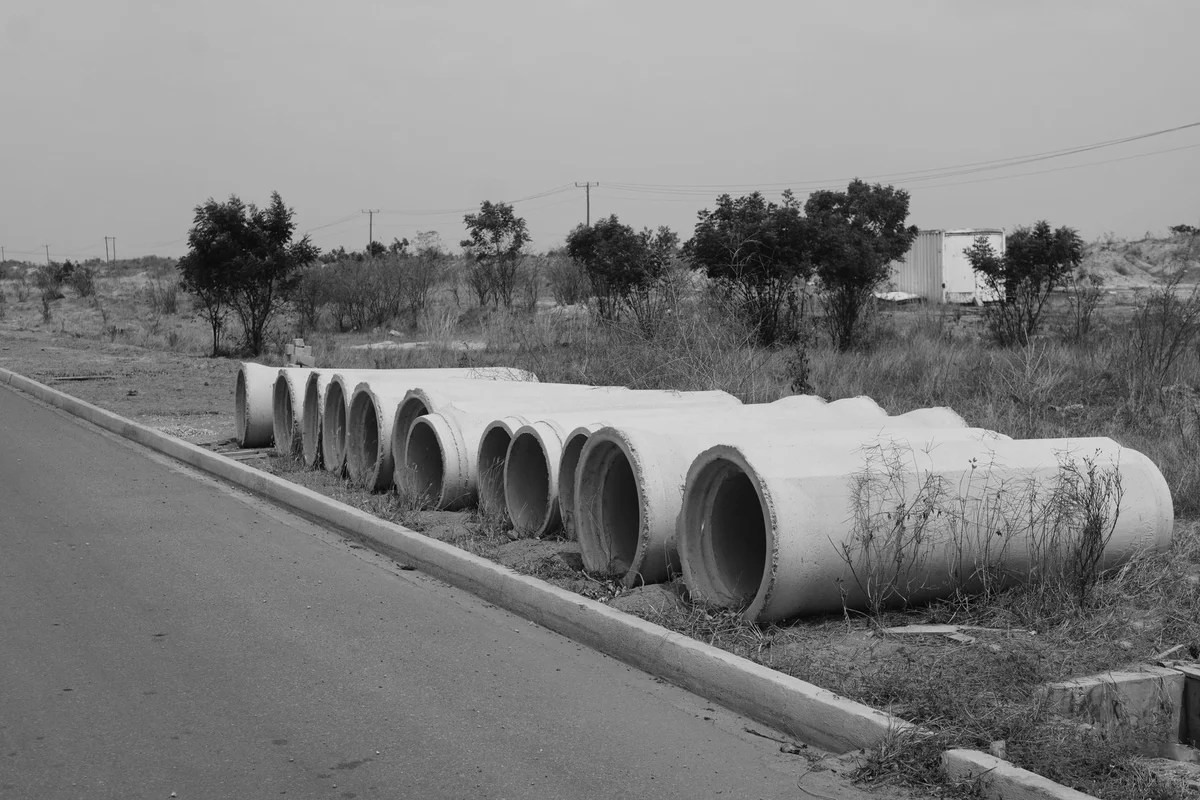
If a written request for access to your duct between two addresses arrived tomorrow, how quickly could you say where it runs, what cross-section it has, how much space is still free and who else is already inside it? Regulation (EU) 2024/1309 — the Gigabit Infrastructure Act, applicable since 12 November 2025 — does more than give anyone laying fibre the right to request access to other operators’ physical infrastructure under Article 3. It also gives, in a separate article, the right to know before asking: where the infrastructure sits, what it is currently used for, and whom to contact. That right presupposes the information already exists, in one place, kept up to date. For those who own ducts, chambers and poles, it often does not.
Physical infrastructure, for the Regulation, is not a cable
Article 2, point (4)(a), defines physical infrastructure as “any element of a network that is intended to host other elements of a network without becoming an active element of the network itself, such as pipes, masts, ducts, inspection chambers, manholes, cabinets, antenna installations, towers and poles”, together with buildings, rooftops, facades and a long list of street furniture. It is the container, not the contents: the same article goes on to state that “cables, including dark fibre” fall outside the definition. The distinction matters: the right to know that follows concerns the duct — where it runs, what cross-section it has — not necessarily what is already inside it.
Three minimum items, and the countdown
Article 4, “Transparency on physical infrastructure”, paragraph 1, states that every operator “shall have the right to access, upon request, the following minimum information on existing physical infrastructure, in electronic format via a single information point”: “(a) georeferenced location and route; (b) type and current use of the infrastructure; (c) a contact point.” Three items, not one more. The deadline is written down: the information “shall be accessible […] no later than 10 working days after the date of submission of the request”, extendable “once by five working days” in duly justified cases. The duty to make available that information proactively, not only hand it over on request, sits in paragraph 3, and Article 19 makes it apply from 12 May 2026 — later than the right to request it, in force since 12 November 2025. Both duties are now fully applicable.
Free space is an add-on, not an obligation
The part that matters most sits in the next paragraph, framed as an option rather than a harmonised duty: “In addition to the minimum information referred to in paragraph 1 […] Member States may require information on existing physical infrastructure such as information on the occupation level of the physical infrastructure.” The Regulation does not require anyone to know how much space is left in a duct: it leaves that choice to each Member State. Whether Italy has exercised this option is not something we verify here. But it is exactly what the other party wants to know first: it is not enough for the duct to exist, they need to know whether a microduct is still free inside it. It is also the datum that changes with every intervention — a new sub-duct blown in, a reel unwound — and no register records it on its own: the crew that did the last installation knows it, a system does not.
The site visit, when the record is not enough
When the record on file is not enough, the Regulation also provides for physical access. Article 4(5) requires whoever holds the infrastructure to meet “reasonable requests for on-site surveys of specific elements of their physical infrastructure upon specific written request of an operator”, granted “within one month of the date of receipt of the request” under proportionate, non-discriminatory terms. This one-off survey, tied to a single request, differs from the periodic inspection schedule maintenance already requires — but the written request must be as specific as an access request under Article 3.
Where that answer sits today
For most networks, the answer is scattered across five or six places. The route, in the as-built record — often a DWG file nobody has updated since the last job. Occupancy, in a spreadsheet kept by whoever did the last installation, when it exists at all. The chambers, in a register that confirms they exist but not what runs through them. Permits and surface reinstatement records, held by the local council, filed against the excavation or micro-trenching job that opened them, not against the route. Co-location agreements, sitting in administration files. And the national network register, which collects what operators submit but does not update it on their behalf. None of these six places answers, on its own and within ten working days, the three questions Article 4 asks — let alone the occupancy question, which none of them carries as a dedicated field. It is a reconstruction to redo, route by route, every time a request arrives, unless it was already done beforehand, when the installation was tested and documented, not afterwards.
Whoever asks has the same problem as whoever holds
The same holds in reverse. Whoever submits an access request does so to decide whether laying fibre in an existing duct beats digging from scratch — and needs exactly the same three minimum items, plus occupancy wherever the Member State requires it. They get it only in the quality the holder keeps it in: a precise location helps with design, a vague one still forces a site visit. Article 4 transparency does not only serve whoever is on the receiving end of it: it serves, even earlier, whoever is deciding whether asking is worthwhile at all.
What we have not verified
This article is not legal advice and does not qualify any contractual position. We have not verified from a primary source the fate of Legislative Decree No 33 of 15 February 2016, which transposed into Italian law the directive this Regulation repeals: we do not state it has been repealed, nor that it remains in force. We have not verified whether Italy has exercised the Article 4(2) option on occupancy data, nor which body has been designated as the single information point or as the competent body for dispute settlement under Article 14. We do not report penalties: the Regulation leaves these to Member States without setting an amount. We do not attribute to AGCOM any specific competence under this Regulation: we have not read one in a primary source.
The duct, before the request
Specifications can close this gap before a request ever arrives, not after. Every installation should hand over the duct’s updated occupancy — not just the route — with the identifier of the structure and the section, in a queryable format, in a single register, not in the spreadsheet of whoever did the work. At acceptance, what gets checked is that this occupancy record exists and is tied to that precise identifier, not that someone states it verbally. It is the same discipline, read in reverse, needed when the problem is not answering an operator but closing a fault: as-built records, the chamber register, duct occupancy, permits and co-location agreements, brought together into a single network map with CSIDIA, the group’s other company, become the basis on which AI runs the diagnosis while the crew is already on site, knowing what runs through that duct and who else is affected. Within the client’s own perimeter: on autonomous on-premise machines with no deep integration into the network, or on dedicated cloud with a data centre in Italy — always with shared management, never a subcontractor.
The point.
The Regulation gives ten working days for three minimum items, one month for a site visit, and leaves it to each Member State to decide whether to require occupancy data too. The part the Regulation does not solve — where to keep that data up to date, before a request ever arrives — remains a matter for specifications and record-keeping, not for the law.
The site visit, at no cost, produces the list of your routes with, for each one, where it runs, what cross-section it has, how much space is free and where that is written down — including the boxes that stay empty. Talk to an engineer: it stays yours even if we do not go on to work together.