Coordination of civil works: the request must go in a month before the final project
7 min read
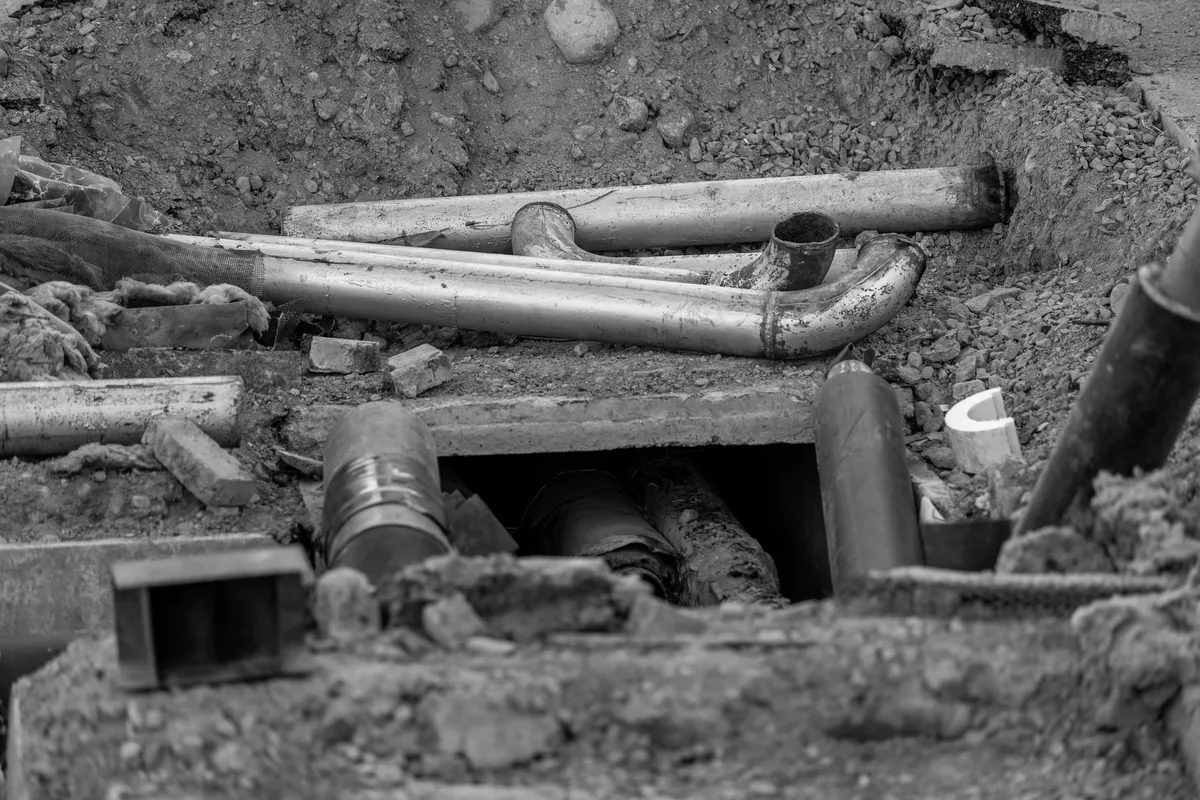
The cheapest metre of fibre is not the one you dig yourself: it is the one someone else is about to dig, that you slip into before the site even opens. Regulation (EU) 2024/1309 — the Gigabit Infrastructure Regulation, applicable from 12 November 2025 (Article 19(2)) — grants this right in Article 5, “Coordination of civil works.” But it is a right with a clock running against whoever wants to use it: if you wait to see the barriers go up, the deadline to ask has already passed.
Who can negotiate, and over what
Article 5(1) starts from a broad base: public sector bodies owning or controlling physical infrastructure and network operators “shall have the right to negotiate agreements on the coordination of civil works, including on the apportioning of costs,” with operators wishing to deploy elements of VHCNs. This is a right to negotiate, not a duty to accept: the real obligation sits in the next paragraph, and only under one precise condition.
The obligation is triggered by public funding
When a public sector body or a network operator is “performing, or planning to perform, directly or indirectly, civil works which are fully or partially financed by public means,” Article 5(2) requires them to meet “any reasonable written request to coordinate those civil works under transparent and non-discriminatory terms.” The distinction matters: not every excavation triggers the obligation, only one carrying public funds, even partially. Works financed entirely by private money sit outside it — there, paragraph 1 leaves only the option to negotiate, not the duty to agree.
Three conditions, and the third is the one that counts
Even where the obligation applies, the request is not met automatically: paragraph 2 sets three cumulative conditions. The first, point (a): the coordination “will not entail any unrecoverable additional costs, including those caused by additional delays,” for whoever planned the works — “without prejudice to the possibility of the parties concerned agreeing on apportioning the costs.” The second, point (b): whoever planned the works “remains in control over the coordination of the works.” That is not boilerplate: joining someone else’s trench means accepting their timetable, not yours.
The third, point (c), is the heart of the matter: “the request is submitted as soon as possible and, when a permit is necessary for the civil works, at least one month before the submission of the final project to the permit-granting authorities.” Not a month before you see the trench open — a month before someone else’s final project lands with the local authority. By the time the barriers are on the ground, that deadline has, in most cases, already gone.
If the refusal has no grounds, whoever refuses pays with capacity
Article 5 does not leave refusal without consequences. Paragraph 4 concerns requests between undertakings providing public electronic communications networks, and treats the request as groundless only where two conditions hold together. First: the area covered by the request has already been the subject of a forecast of broadband reach, or an invitation to declare an intention to deploy VHCNs under Article 22 of Directive (EU) 2018/1972, or a public consultation on State aid. Second: whoever is asking for coordination failed to declare an intention to deploy VHCNs in that area in the most recent such procedure. Only where both apply can the refusal stand — and even then, whoever refused still pays a price: the undertaking that refused coordination “shall deploy physical infrastructure with sufficient capacity to accommodate possible future reasonable needs for third-party access.”
A Member State option, not yet confirmed
Paragraph 5 leaves Member States the option — not the obligation — of identifying types of works “limited in scope, such as in terms of value, size or duration,” or related to national critical infrastructure, that could be exempt from the coordination obligation. “The justification, criteria and conditions” for such exceptions “shall be published via a single information point” — but whether Italy has actually identified any such categories has not been verified, as of this article, on a primary source. We do not presume it either way: the same caution already flagged for Articles 3 and 9 of this Regulation.
The BEREC guidelines: we looked, and they exist
Paragraph 6 set BEREC a task with a firm deadline: “By 12 November 2025” — after consulting stakeholders — “BEREC shall, in close cooperation with the Commission, provide guidelines on the application of this Article,” in particular on apportioning costs, criteria for dispute settlement and criteria for ensuring sufficient capacity where coordination is refused. We looked for them on BEREC’s website. They exist: “BEREC Guidelines on the coordination of civil works according to Article 5(6) of the Gigabit Infrastructure Act,” reference BoR (25) 140, dated 2 October 2025 — ahead of the deadline, not after it. On apportioning costs, BEREC splits them into additional costs, borne by whoever requests coordination because they alone caused them, and shared costs, to be split using a method the guidelines suggest in several variants without mandating one: Member States and dispute settlement bodies remain free to choose which to apply, case by case.
The third piece
We have written before, from this same Regulation, about the right to access existing physical infrastructure and the deemed-granted rule on permits. The three pieces read in sequence: first you check whether the duct already exists and belongs to someone else (Article 3); then, if someone else is about to dig with public money, you ask to join their trench (Article 5, here); finally you apply for the permit for the works, your own or coordinated (Articles 7-8). Knowing when someone is about to dig is not left to chance: that is what Article 6 is for, which opens by saying it exists “in order to enable the negotiation of agreements on coordination of civil works referred to in Article 5” — and requires the location and planned date of works to be made available via a single information point, “not later than two months before the first submission of the application for a permit to the competent authorities.”
Into the schedule, a line with a deadline counted backwards
The operational consequence: the coordination request goes into the project schedule as a line of its own, with a deadline counted backwards from someone else’s final project — not from the date the site becomes visible. In the specifications we write and review that deadline is a line with the point (c) cut-off date, and the cost-apportioning agreement is put in writing before the site opens, not during; on acceptance we check that what was laid in the shared trench is what was agreed, and that — in cases of groundless refusal — the capacity installed is the capacity declared. Works planned by others, requests submitted, outcomes and routes actually laid feed into a single network map: on that map an AI flags in advance where an excavation is about to open along a route that concerns you, with how much time remains before the one-month deadline — an operational early warning, not a dashboard: the team decides, together with CSIDIA, the group’s other company. Always in two modes: on autonomous on-premise machines that require no deep integration into the client’s network, or on dedicated cloud with a data centre in Italy — always with shared management.
The point.
The right to join someone else’s excavation exists, it can be negotiated even on apportioning costs, and there is a price for refusing it without one of the permitted grounds. But it is exercised beforehand, not once the site is already visible: the point (c) deadline — at least one month before the final project — is counted backwards from a date you do not control. And even where the request is granted, whoever planned the works keeps control of the site: costs can be negotiated, the timetable cannot.
Do you know which publicly funded works are planned along your next route? Talk to an engineer: the site visit costs nothing, and the coordination request is drafted while the other project is still in progress, not once it has already reached the local authority.